
B80 Edge Protection: Design Out Drilling
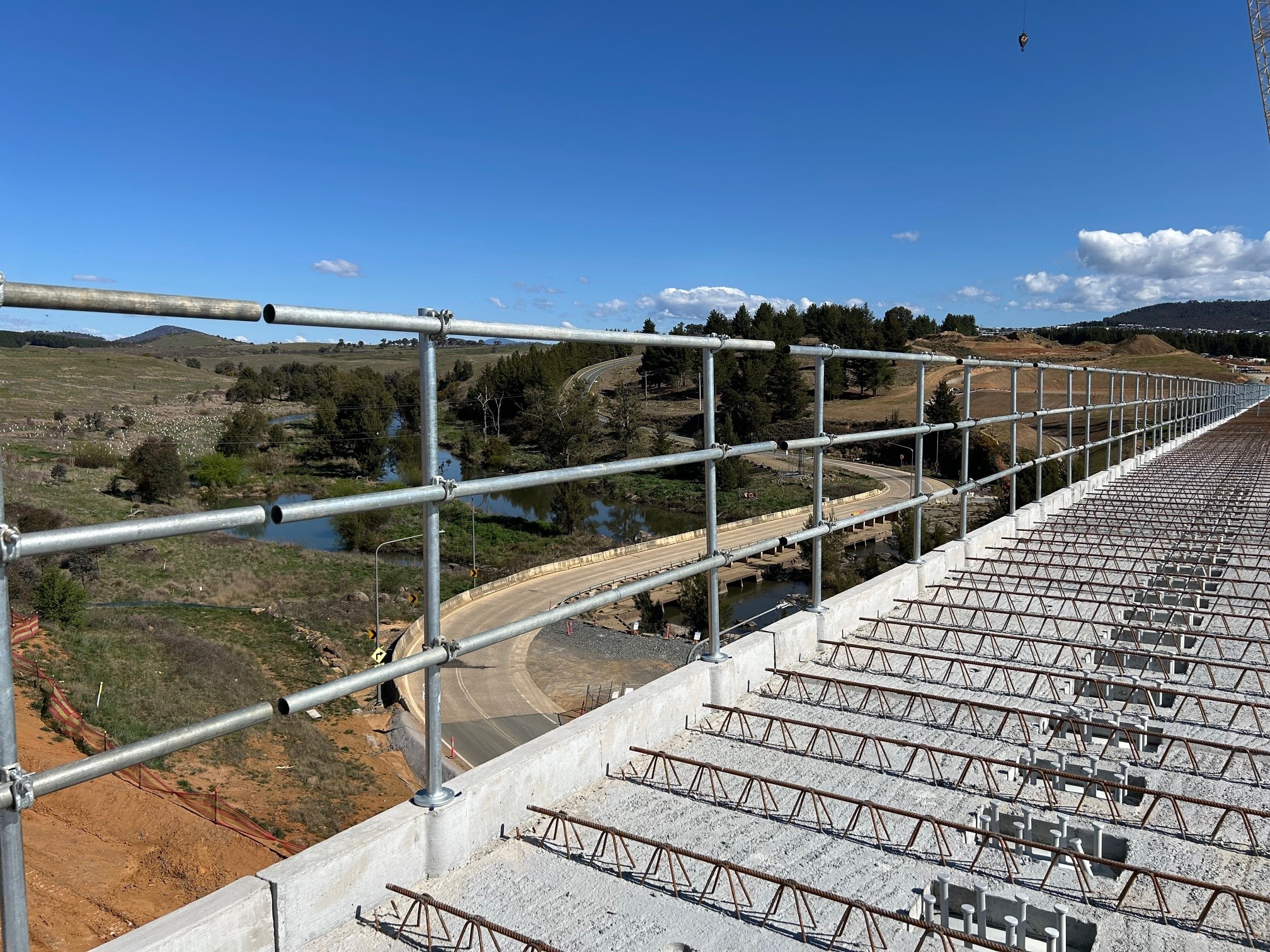
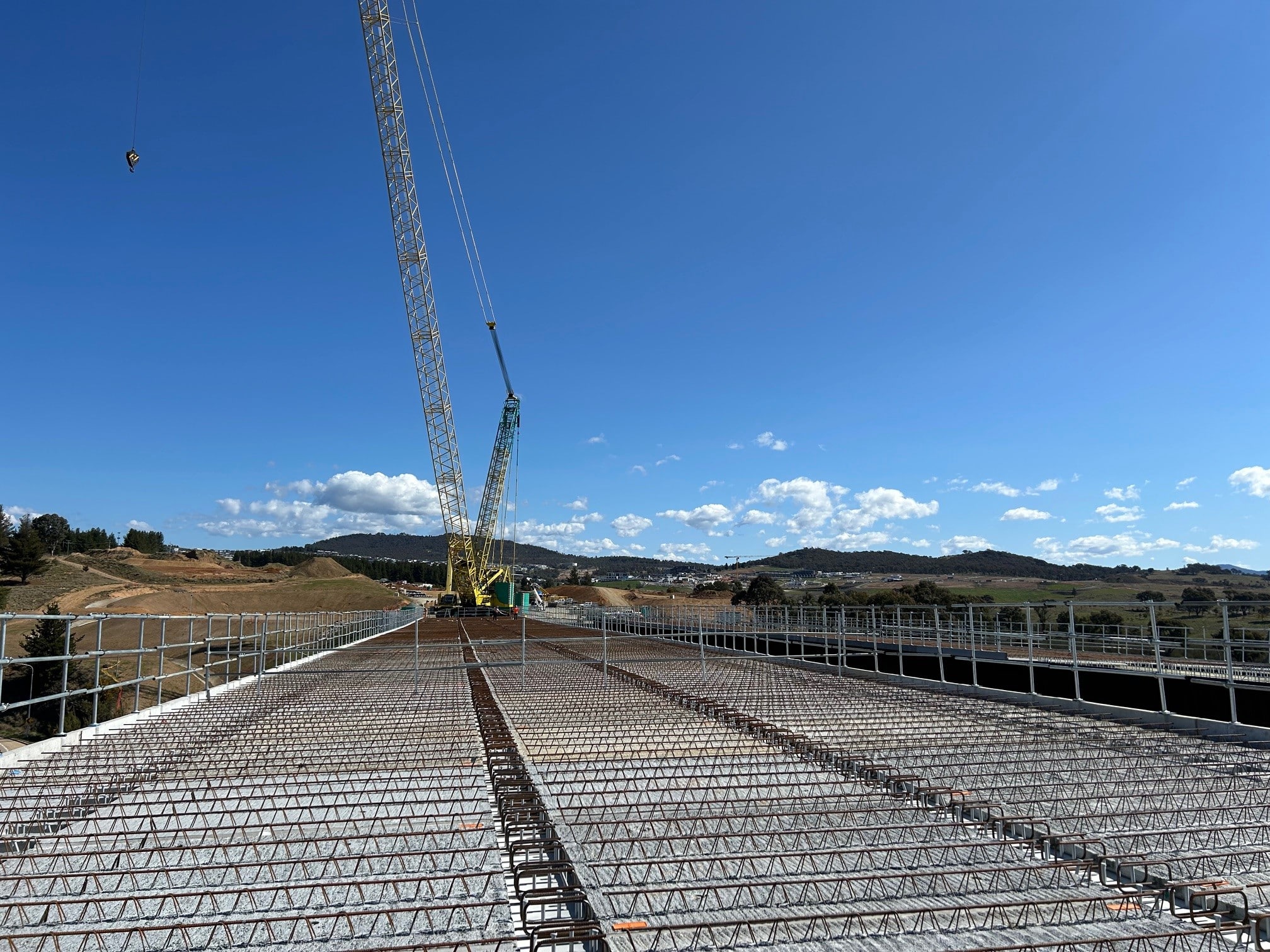
Post-pour drilling should not be the default way to fix temporary edge protection to permanent bridge concrete. Plan suitable lifting anchors, ferrules and cast-in connection points earlier with SafeSmart NONDRILL, where the design allows it.
Bring the fixing decision into design
Working on a bridge, civil or precast project? Bring SafeSmart in before anchor locations, reinforcement details and shop drawings are frozen
THE SHORT ANSWER
On TfNSW bridge work, B80 makes the fixing method a design and approval question when temporary works could damage permanent concrete. NONDRILL provides a planned route using suitable lifting anchors, ferrules or cast-in points, so post-pour drilling does not become the default where the project can accommodate an alternative.
What the TfNSW B80 specification changes for edge protection
The current Transport for NSW QA Specification TS 01733.1 (B80) requires Principal approval when temporary works would damage permanent works; its examples include drill holes, inserts and fixtures. A request must explain why other methods are not feasible, show how reinforcement, stressing strands, conduits and structural integrity will be protected, identify the proposed fixing details and set out rectification.
That is not a blanket ban on drilling. It is a clear reason to settle the edge-protection fixing method before finished concrete turns a design decision into an approval, QA and repair exercise.
Some project teams and searchers still use the legacy phrase “RMS B80 specification”. The current reference is TfNSW QA Specification TS 01733.1 (B80), Concrete Work for Bridges, Edition 8 / Revision 0, April 2025.
Why a late drill request can carry more than installation time
A drill may look like the quickest answer at the edge. On permanent bridge concrete, the full decision can extend well beyond the holes themselves.
- Approval and justification: The project may need to show why non-damaging methods are not feasible and obtain the Principal’s approval before work proceeds.
- Permanent-asset risk: Poorly located fixings can threaten reinforcement, stressing strands, conduits, cover and the finished concrete surface.
- QA and handover: Hole locations, depths, inspections, repair materials and finish quality can create extra records, hold points and handover questions.
- Silica controls: Drilling concrete is a crystalline-silica processing task that must be assessed and controlled. Removing the drilling step removes or reduces that task for this installation where NONDRILL is suitable.
- Program and commercial pressure: Approval requests, redesign, rework, patching and variation discussions can appear when the fixing method is decided after the concrete edge is complete.
DESIGN-STAGE PRINCIPLE
The objective is not to make drilling sound impossible. It is to stop drilling from becoming the unexamined fallback after the project’s best planning window has closed.
How NONDRILL Changes the fixing sequence
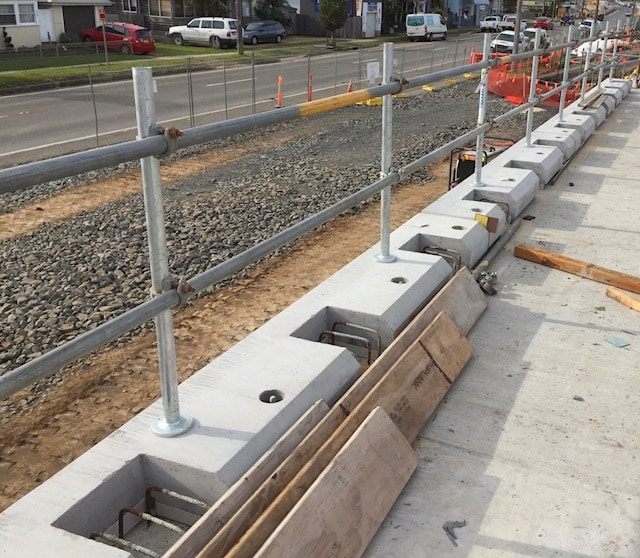
The SafeSmart NONDRILL Handrail Post is designed to connect to suitable lifting anchors and related planned connection points on precast structures rather than relying on new post-pour holes. Available configurations include 1.3, 2.5, 5 and 10 tonne connections and hairpin anchors, subject to the selected system, geometry and project-specific engineering.
| LATE-FIXING SEQUENCE | PLANNED NON-DRILL SEQUENCE |
|---|---|
| Concrete edge is completed | Review edge protection during design or constructability |
| Site asks where to fix the posts | Select suitable lifting anchors, ferrules or cast-in points |
| Drilling, approval and strike controls are developed | Coordinate connection locations with reinforcement and shop drawings |
| Holes are inspected, repaired and handed over | Install, inspect and document the planned system |
What that can improve
- Plan the connection strategy: Make edge protection part of temporary-works methodology rather than a site improvisation.
- Avoid post-pour drilling where suitable: Use planned or existing connection points when the project design and engineering allow it.
- Protect the permanent asset: Reduce the opportunity for avoidable holes, strike events, patch repairs and finish defects.
- Remove or reduce one silica-generating task: Take the concrete-drilling step out of this edge-protection installation where possible.
- Give reviewers a clearer method: Bring the connection, installation, inspection and evidence pathway together before work reaches the edge.
The best time to review NONDRILL is before the pour
The strongest opportunity exists while the project can still influence the concrete, the connection points and the temporary-works method.
Concept and tender
Identify finished-concrete edges, likely access stages and the intended temporary edge-protection philosophy in the methodology and price.
Constructability and temporary works
Test the handrail layout, loading, sequence, interfaces and approval pathway before the system is needed on site.
Precast detailing and shop drawings
Coordinate suitable lifting anchors, ferrules or cast-in points with reinforcement, moulds, lifting design and connection geometry.
Pre-pour and pre-start
Confirm locations, clearances, components, installation method, inspections, SWMS, records and responsibilities.
ALREADY POURED?
A review may still identify suitable existing anchors, ferrules or project-specific face-mounted options. Do not assume an existing point is suitable: geometry, loading, condition, location and the complete temporary-works method still need to be checked.
What a design-stage edge protection review covers
SafeSmart can work with the project’s engineering, temporary works, precast, construction, HSE and QA teams to review:
- Structure type, edge condition, construction sequence and required protection periods
- Precast or in-situ concrete and the status of reinforcement, lifting design and shop drawings
- Available or proposed lifting anchors, ferrules, cast-in points or face-mounted connections
- Connection geometry, edge distances, post spacing, loading and handrail configuration
- Interfaces with formwork, access, lifting, backfill and permanent works
- Installation, inspection, evidence, training and ongoing support requirements
- Temporary-works design, Principal or project approvals, SWMS, QA and site-specific controls
Review the method while it can still be designed
Share the project stage, structure type and current anchor or ferrule status. SafeSmart can help identify the next technical conversation.
Temporary versus permanent edge protection: use the right standards context
Temporary and permanent barriers are not interchangeable compliance conversations. The AS/NZS 4994 series provides the temporary edge-protection context, while AS 1657:2018 addresses fixed platforms, walkways, stairways and ladders for ongoing access. The applicable standards, loading, design, installation and inspection requirements must be confirmed for the project and the selected configuration.
NONDRILL can support a compliant methodology, but the product name or connection type does not replace temporary-works design, engineering checks, approvals, SWMS, installation controls or QA evidence.
For a plain-English starting point, read Edge-Protection Rules Explained: AS/NZS 4994.1 and AS 1657.
For field planning, download the 9-Point Edge-Protection Checklist.
Project examples: planned connections in practice
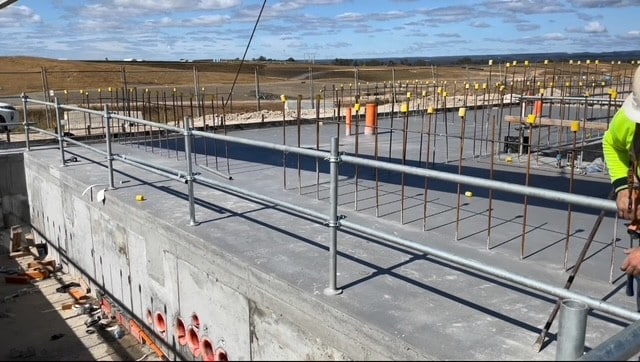
Precast edge protection at Eastern Creek
Preset ferrules cast into precast panels provided connection points for a customised edge-protection solution without adding new drilled holes to the finished panels. The case demonstrates the value of bringing edge protection, precast detailing and connection planning into the same conversation. Read the Eastern Creek project story.
Face-mounted NONDRILL at Evans Road
A project-specific face-mounted system attached posts to embedded M16 ferrules around a deep pit, allowing edge protection to remain coordinated with the concrete works and site access without drilling new post fixings into the newly poured concrete. View the Evans Road project story.
IMPORTANT
These examples show a planning principle, not a universal detail. Connection selection, layout, loads, edge distances, installation and approvals must be assessed for each project.
B80 and non-drill edge protection FAQs
Does B80 ban drilling into bridge concrete?
No. B80 does not create a blanket drilling ban. It requires Principal approval where temporary works would damage permanent works and expects the request to justify why other methods are not feasible and define how the proposed work and rectification will be controlled.
What does B80 mean for temporary edge protection?
It makes the fixing method difficult to treat as a routine late site decision when it could damage permanent concrete. The project has a stronger reason to consider non-damaging connection options during design, constructability and temporary-works planning.
What edge protection system can avoid post-pour drilling?
SafeSmart NONDRILL is designed to connect posts to suitable planned or existing lifting anchors, ferrules and related connection points. The exact configuration and suitability must be checked for the project.
Can existing lifting anchors be used for edge protection?
Sometimes. The anchor type, capacity, condition, location, geometry, edge distance, post spacing, loads and full handrail layout all matter. Existing lifting points should not be assumed suitable without review.
When should SafeSmart be engaged?
Ideally during concept, tender, constructability review, precast detailing or temporary-works planning – before anchor locations, reinforcement details, moulds and shop drawings are frozen.
Does NONDRILL automatically make a project compliant?
No. NONDRILL can support a compliant methodology, but project-specific engineering, temporary-works approval, installation procedures, SWMS, QA, inspection and site risk controls remain required.
Review your edge-protection method before the pour
If the project team is already asking where to drill, the fixing decision is under pressure. Bring SafeSmart into the conversation while suitable connection points, reinforcement details, shop drawings and temporary-works methodology can still be coordinated.
Design out the drill hole
Start with a project-specific review of the edge, connection options and delivery stage.
COMPLIANCE NOTE
NONDRILL supports a planned project-specific method; it does not create automatic compliance. Engineering, temporary-works approval, installation method, SWMS, QA, inspections and site-specific risk controls remain required

