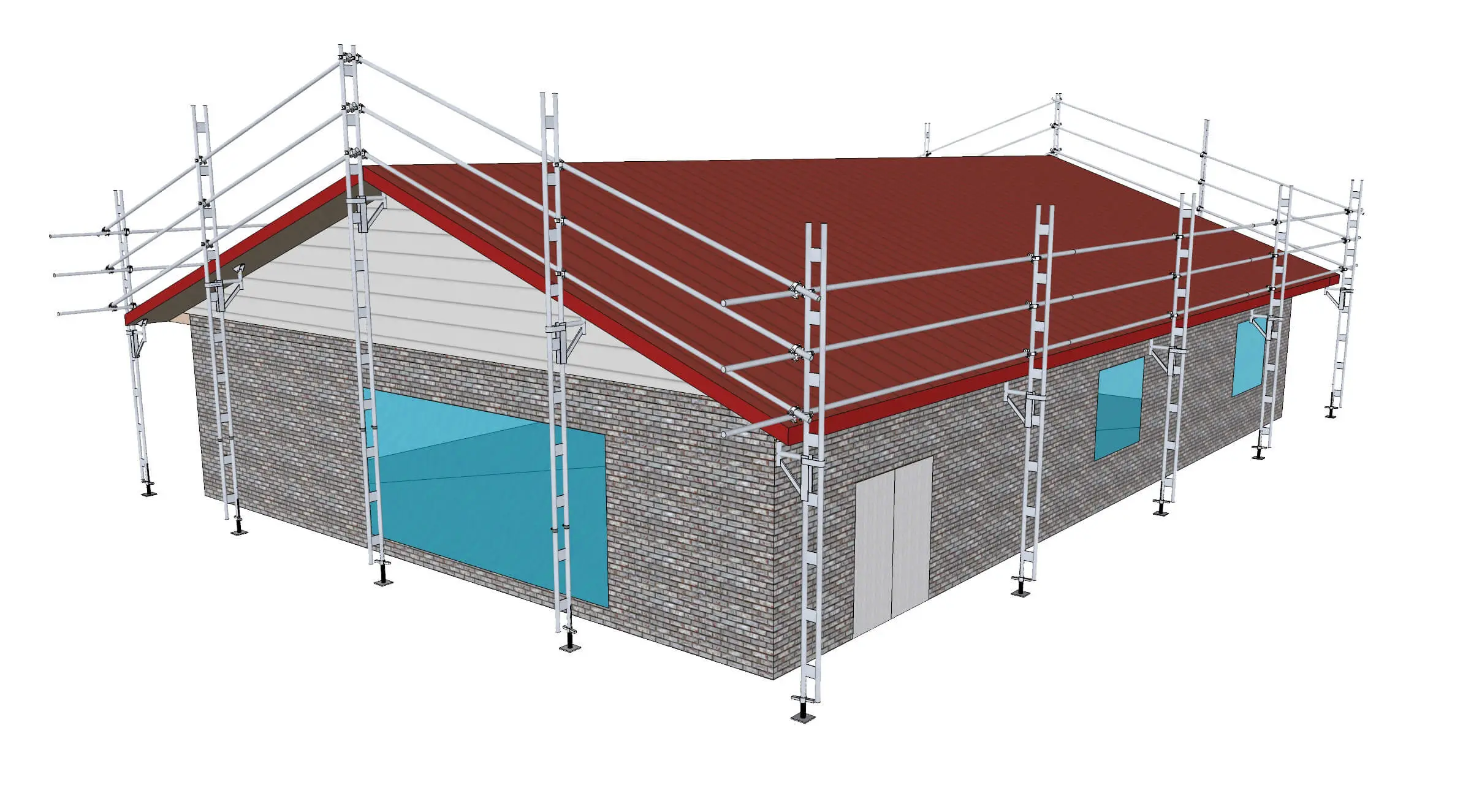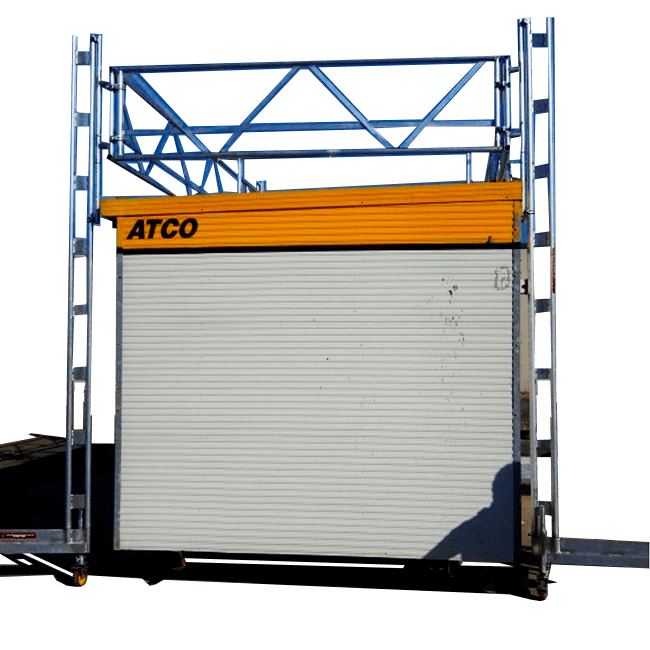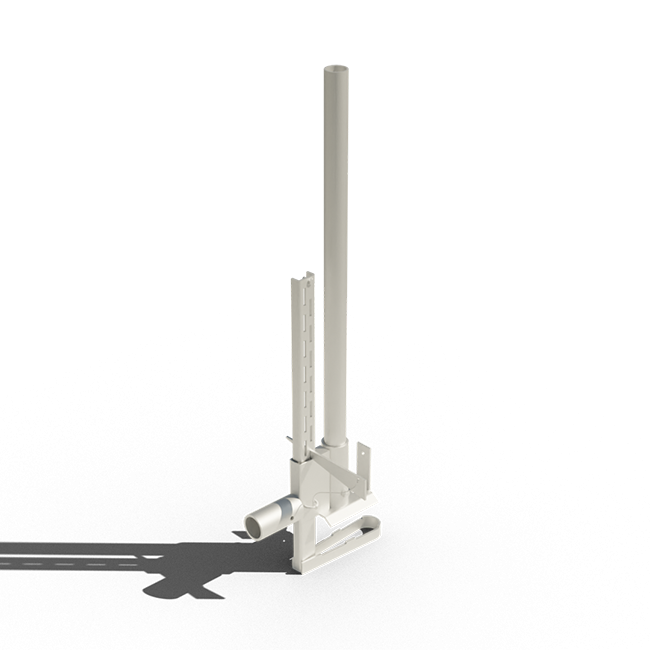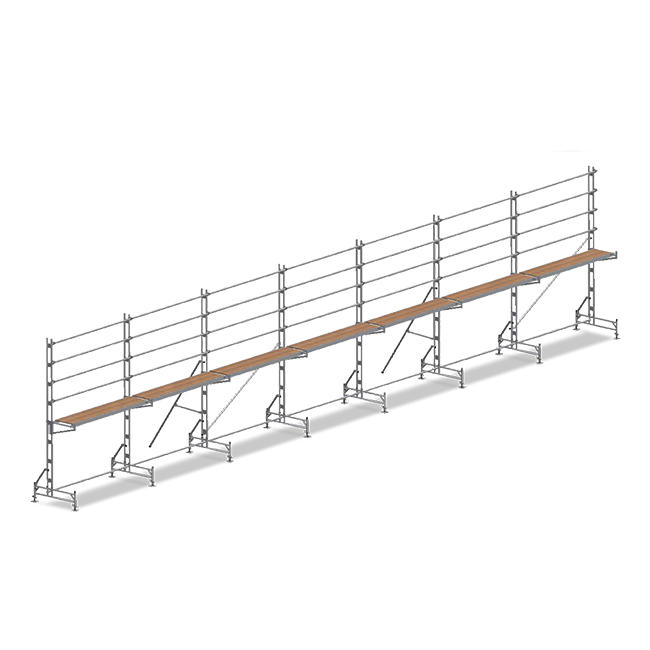


NON-DRILL is a modular edge protection and handrail system that connects posts to suitable lifting anchors, ferrules and other engineered connection points.
Rather than drilling new holes into concrete slabs, walls, bridge segments or precast elements, the Non Drill Handrail system uses connection points already cast into or attached to the structure.
This removes the concrete drilling normally required for post installation. It can reduce installation time, avoid damage to finished concrete and remove the silica dust generated by drilling those post fixings.
NON-DRILL can be configured for temporary edge protection, permanent handrails or a staged transition from temporary to permanent protection, and it is versatile enough to suit settings from residential to industrial.
SafeSmart can support the complete process: site scoping, connection selection, layout drawings, temporary-works engineering, certification, supply, installation support and site training.
The NON-DRILL system uses a compatible clutch or connector to secure the handrail post to an approved connection point.
The anchor, ferrule or connection point is identified by its type, manufacturer, size and rated capacity. Drawings and site conditions are reviewed before the correct NON-DRILL connection is selected.
The suitable clutch or connector is fitted to the anchor, ferrule, stirrup, shear stud or other approved connection point, connecting directly to lifting anchors on precast structures, including lifting anchors on precast and hairpin anchors where approved for anchors on precast structures.
The NON-DRILL post is secured to the connector. Handrails, mid-rails, kickboards, gates and other components are then installed in accordance with the approved layout.
The connection method is simple, but the suitability of the complete system still depends on anchor capacity, geometry, edge distances, post spacing, loading and the condition of the structure.
Drilling into concrete can generate respirable crystalline silica. NON-DRILL removes that drilling task from the standard post installation method when suitable connection points are available.
This does not replace the site’s broader silica management plan. It removes one silica-generating activity from the edge protection installation.
No holes need to be measured, drilled and cleaned before the posts are fitted. There is also less time spent setting up power tools, managing dust extraction and checking for reinforcement.
SafeSmart states that crews can install up to 12 NON-DRILL posts in the time normally required to install one conventional two-hole drilled post. This more efficient process helps contractors reduce labour costs and avoid costly labour hire compared with slow drilled installation methods.
Drilling can damage finished surfaces, cause exposing steel, affect waterproofing, and compromise structural integrity.
By using planned or existing connection points, NON-DRILL avoids unnecessary penetration into the concrete structure, helping maintain structural integrity and lower installation risk.
Traditional drilled posts can leave bolts, holes and damaged concrete behind when the temporary handrail is removed.
NON-DRILL connections can be removed or incorporated into the permanent works, depending on the approved design. When designed correctly, they can be taken out without leaving surface damage or traces and can support compliance with local safety standards. This reduces cutting, patching and concrete repair work.
The galvanised posts, rails, clutches and connection components can be removed, stored and reused. Dedicated stillages are available for storage and transport between work areas and projects.
NON-DRILL can be configured as temporary edge protection for construction activities around:
The 1.05 m post is used for standard temporary handrail configurations. A 1.8 m post is also available where additional height or containment is required.
Kickboard brackets, end caps, gates and project-specific components can be incorporated into the layout.
The same posts and rails can be used to transition from temporary edge protection to a permanent handrail, with the same connection approach carried through where the approved design allows.
On reinforced earth and reinforced soil structure walls, temporary protection can be installed as backfilling approaches the top of the wall. When the permanent level is reached, the posts and rails can be transferred into their permanent configuration without leaving the edge unprotected during the changeover.
For slabs and stairs, the system can be installed before formwork is removed. The handrails can then remain in place while the surrounding works continue.
For permanent use, the system can include:
Adjustable connectors are available for changes in direction, gradient and handrail alignment.
Watch how NON-DRILL transitions from temporary to permanent handrails
NON-DRILL is not limited to one type of lifting anchor. Its connection range makes it a versatile solution across different anchor and steel interfaces.
| Connection type | Compatible sizes and configurations |
|---|---|
| Cone anchors | 1.3T, 2.5T, 5T and 10T clutches |
| Custom cone anchor | 20T clutch available on request |
| Hairpin and EdgePro anchors | Connections to suit hairpin, Ancon, Reid and PSA anchor types from 3T to 15T |
| Ferrules | M12, M16, M20 and M24 |
| Steel stirrups | 12 mm, 14 mm and 16 mm |
| Shear studs | Up to 22 mm shank diameter and 200 mm height |
| Sheet piles | Connections for sheet piles up to 20 mm thick |
| Face-mounted connections | Project-specific connections to embedded ferrules |
| Side-mounted connections | Available where top mounting is unsuitable |
Connection suitability cannot be determined by anchor size alone. The manufacturer, rated capacity, condition, location, edge distance, geometry and complete handrail layout must all be checked.
| Specification | Detail |
|---|---|
| Standard post height | 1.05 m |
| Taller post option | 1.8 m |
| Typical maximum spacing for 1.0 m handrails | 2.4 m |
| Typical maximum spacing for 1.2 m handrails | 2.0 m |
| Cone anchor connections | 1.3T, 2.5T, 5T and 10T |
| Custom clutch option | 20T |
| Ferrule connections | M12, M16, M20 and M24 |
| Post finish | Galvanised steel |
| Available configurations | Temporary, permanent and temporary-to-permanent |
| Custom fabrication | Available |
| Powder-coated finish | Available |
These product details outline available heights, finishes and connection options.
These spacings are general product information. The approved spacing for a project depends on the post, connection, handrail height, loading and site-specific engineering.
Install temporary protection as the backfill approaches the top of the wall. The same system can then be transferred into a permanent handrail configuration.
Incorporate ferrules or lifting anchors into precast structures so the handrail system connect can be made before or during erection without drilling finished panels.
Use planned lifting anchors or project-specific connections for temporary protection during casting, transport, installation and finishing work.
More than 40,000 anchors were incorporated into the segment design for the West Gate Tunnel Project. NON-DRILL could then connect to planned anchors on the bridge parapets.
Top-mounted and side-mounted connections can be designed around the headstock geometry, reinforcement and planned construction sequence.
Attach posts to suitable planned points without drilling into the girder flange. Short-foot ferrule options can be assessed where the available concrete thickness is limited.
Install handrails around culvert openings, headwalls and elevated concrete edges using suitable cast-in anchors or ferrules.
Project-specific connections can be designed for temporary handrails or mesh panels installed above concrete barriers.
Install protection before formwork removal so the handrail is available when the edge or stair opening is first exposed.
Special claw connections can attach handrails to container locking points. Configurations can be developed for 20 ft and 40 ft containers, including stair and landing access.
NON-DRILL connectors can attach to suitable shear studs, steel stirrups and other designed steel connection points.
Connection options are available for sheet piles up to 20 mm thick, subject to the pile profile, loading and approved layout.
NON-DRILL connection points can support project-specific walkway brackets. The SafeSmart bracket uses a single connection point and can be configured for loads up to 500 kg per metre.
View the NON-DRILL walkway bracket
Temporary and permanent handrails have different design requirements and must meet industry standards for the intended application.
NON-DRILL can be configured and engineered to meet the following standards for the project:
Posts and configurations are designed for compliance with AS 1657:2018 requirements where applicable, alongside relevant structural design actions under AS/NZS 1170.1.
SafeSmart product information lists configurations for:
Using a NON-DRILL connection does not automatically make the complete installation compliant. The connection, posts, rails, spacing, loads, structure, installation method and inspection process must be reviewed together to meet industry standards and align with broader industry standards.
For more information, read Edge Protection Rules Explained: AS/NZS 4994.1 and AS 1657 or download the 9-Point Edge Protection Checklist.
The best time to review NON-DRILL is during concept design, tender, temporary-works planning or precast detailing, as early planning is a better way to avoid slow, destructive drilling decisions later in the project.
Early planning allows the anchor locations to be coordinated with the right connection in the right planned position, helping reduce human error during installation, with:
SafeSmart can work with construction, precast, temporary works, engineering, HSE and project teams to prepare a practical system for each stage.
The service can include:
For road and bridge projects, read B80 Edge Protection: Design Out Drilling.
At a data centre project in Eastern Creek, preset ferrules were cast into the precast roof panels. These provided connection points for a customised edge protection system without drilling additional holes into the finished panels.
SafeSmart worked with the construction team and third-party certifiers to review the handrail layout, wind loading and mesh requirements.
Read the Eastern Creek precast edge protection case study
A civil construction project in Cranbourne West required edge protection around a 9 m deep pit. SafeSmart developed a face-mounted NON-DRILL configuration that connected posts to embedded M16 ferrules in the newly poured concrete.
Custom gates were incorporated for AdjustaStairs access to the lower bench. The face-mounted system also allowed the surrounding floor slab to be poured while the edge protection remained in place.
Read the Evans Road NON-DRILL case study
Not when suitable lifting anchors, ferrules or other approved connections are already available.
If the structure has already been poured without a suitable connection point, SafeSmart can assess existing anchors, face-mounted options or a project-specific drop-in ferrule. A drop-in ferrule requires a drilled hole, so that configuration is not completely drill-free.
The brochure lists typical maximum spacings of 2.4 m for 1.0 m high handrails and 2.0 m for 1.2 m high handrails. Project-specific spacing must be confirmed through the approved design.
Yes. Permanent posts, rails, baseplates and modular galvanised connectors are available. The permanent configuration must be designed for the intended environment, loading and service conditions.
Yes. Standard 1.05 m and 1.8 m posts are available, with custom fabrication offered for other requirements.
Yes. Powder-coated finishes can be supplied where required by the project.
Potentially. The anchor type, manufacturer, capacity, condition, position and intended loading must be checked before it is used for edge protection.
No. It removes the drilling task associated with installing the edge protection posts. Other construction activities may still generate silica dust and require separate controls.
Send SafeSmart your structural drawings, proposed connection points, edge lengths, construction stages and temporary or permanent handrail requirements.
Our team can scope, design, engineer and deliver a robust NON-DRILL solution that supports safety and compliance across the complete project lifecycle.