
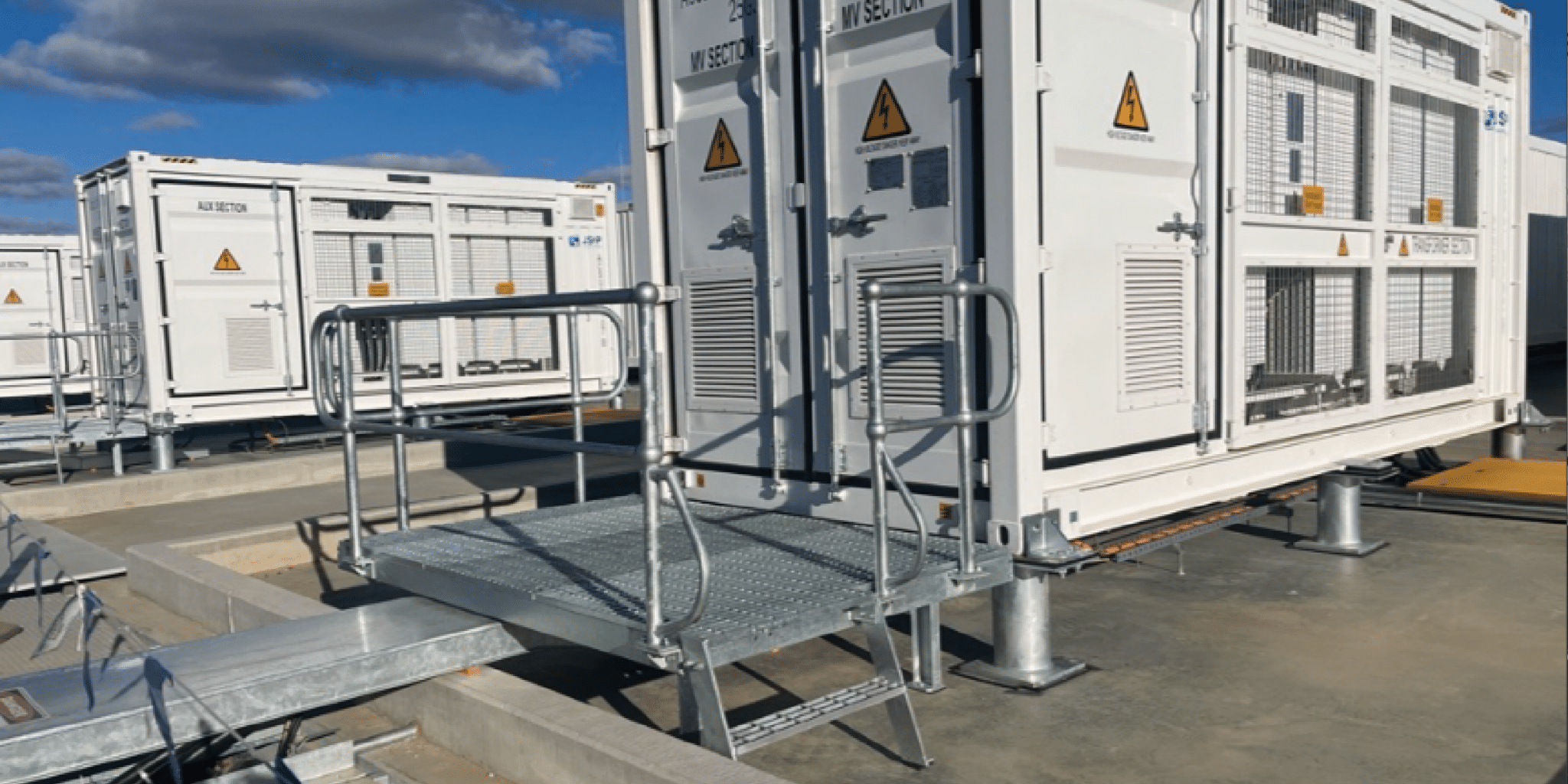
A confidential energy project required inverter access platforms that would provide permanent raised access to site equipment over a 40 year design life. SafeSmart engineers modelled a custom steel solution. The team then manufactured and supplied the platforms within the time frame accepted by the client. The nominated access standard was AS 1657 2018, and the client was extremely happy with the delivered solution. The client and location remain confidential. The project shows how access planning changes when a platform becomes part of the energy asset and must support maintenance over a long service period.
Project context and required task
The client operated a solar farm or battery energy storage system project and needed permanent raised platforms for access to equipment on site. The access system was expected to remain part of the asset, with a stated 40-year design life. That service period moved the task beyond a short-term work platform or construction access measure.
The client name and project location remain confidential. The application centred on permanent equipment access, supported by a custom steel design and referenced to AS 1657 2018. Keeping the identity private does not change the planning lesson for other energy teams. Start with the maintenance task and the asset interface.
Why a standard platform did not fit
Permanent energy equipment access starts with the task and the equipment interface. Entry points, service panels, door swings, cable zones and maintenance clearances can affect where stairs, landings and handrails may sit. A standard platform footprint may obstruct the equipment or place the user away from the intended service point.
The design life also changes the review. The design team needs confirmed loads, environmental exposure, support conditions, drainage, material protection, connection details, inspection access and the planned maintenance regime. Each input should be resolved for the asset before the platform configuration is approved.
The SafeSmart solution
SafeSmart engineers developed a model for the required raised access arrangement. The company completed the design and supplied the manufactured custom steel platforms. The client accepted the delivered solution and was extremely happy with the result.
The supplied platform had a verified 40-year design life. That figure applies to the approved project configuration and its engineering assumptions. Any other permanent access platform requires its own review of exposure, materials, connection details and maintenance conditions.
How the inverter access platforms were developed
The equipment interface set the access task
The platforms were required to provide raised access to site equipment. For this type of work, the model should locate the work position against the service points while preserving equipment clearances and planned operating zones.
Engineering modelling tested the arrangement
SafeSmart’s engineers modelled a design that worked for the client. Modelling gives both parties a shared reference for geometry, interfaces, clearances and access routes before manufacture. The approved model can then guide fabrication information and client review.
A permanent access platform formed part of the asset
Unlike temporary construction access, the platform was intended to stay with the equipment. The final arrangement therefore had to be considered alongside long term inspection, maintenance planning, modification control and any future changes to the equipment area.
Manufacture and supply followed the approved design
SafeSmart completed the design and supplied the manufactured platform solution. A controlled delivery process should keep the approved model, fabrication documents, installation information and handover records connected to the same configuration.
Project delivery and coordination
The client provided the permanent access requirement and the expected service life. SafeSmart’s engineers then created the design model, and the finished platforms were delivered within time frames accepted by the client. The model connected the equipment access task with manufacture and supply.
For future energy project access platforms, the early information set should include equipment drawings, access points, operating clearances, expected users, carried tools, design loads, foundation details, environmental exposure, connection preferences and installation constraints. Project teams should also identify who owns inspections and how later equipment changes will be assessed.
Long-term access also has an ownership question. The asset team should know where the approved drawings are stored, who inspects the platform, which maintenance actions apply to coatings and connections, and how modifications are controlled. A later change to an inverter enclosure, cable route, operating zone or adjacent plant may alter the access task even when the steel platform itself has not changed.
Outcomes for the energy project
A client-approved equipment access arrangement
The delivered system gave the client the permanent raised access requested for its equipment. The client was extremely happy with the solution.
A 40-year design life
The platform solution was designed for a 40-year life. That claim belongs to the approved project configuration and its engineering assumptions. It should not be applied to another BESS access platform without a separate design review.
What other energy teams can apply
Define the maintenance task before selecting platform geometry. A raised deck only helps when users can reach the required equipment points without conflicting with doors, cables, ventilation zones or operating clearances. Include the route to the platform as well as the work position on it.
Treat service life as a design input rather than a line in the specification. Exposure, materials, protective systems, connections, inspection access and maintenance assumptions all need technical review. Inverter access platforms should be assessed as part of the wider asset interface, not as a separate item placed after the equipment layout is fixed.
For a BESS access platform, include equipment exclusion zones, planned emergency routes, asset interfaces and the site’s approved operating controls in the design review. These inputs help the access arrangement avoid conflict with the asset plan, but they still require confirmation by the project engineer and the equipment supplier.
Plan permanent access around the equipment
Send SafeSmart the equipment drawings, access points, design life, loads, site exposure and installation constraints so the engineering team can review a platform arrangement for the asset.

