
Scaffold Edge Protection Alternatives for Precast Stormwater Pits
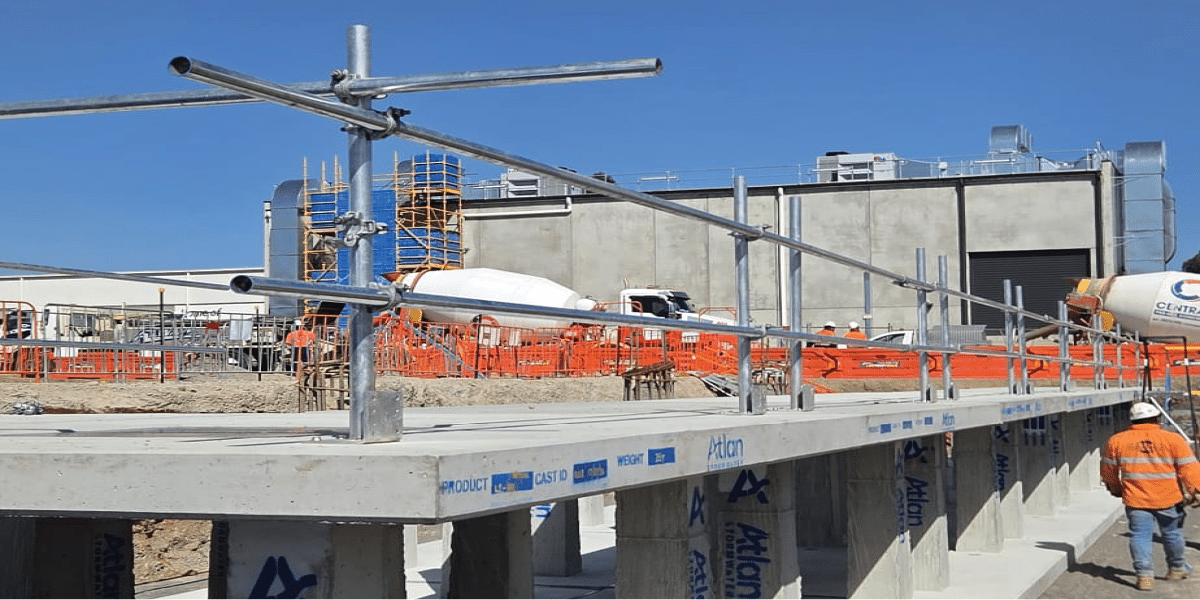
Scaffold edge protection can be part of a site method around an open excavation, but Geschke Plumbing took a different approach at AirTrunk MEL2 Data Centre in Melbourne. The team needed a temporary handrail around large precast concrete stormwater pits. SafeSmart supplied MultiMount Guardrail Posts that could be fixed while each pit was still at ground level, then lifted with the precast unit into position. The post system supported top and face mounting around different surfaces. This changed the installation sequence, leaving less handrail work to complete beside exposed pits after placement. The MultiMount arrangement was a guardrail system, not a scaffold.
Project context and required task
Geschke Plumbing was installing large precast stormwater pits for the AirTrunk MEL2 data centre project in Melbourne, Victoria. Once a pit was lifted and set in place, its open perimeter created a fall hazard that required temporary handrail protection.
The practical issue was timing. If the pit went into the ground first, the crew would then have to install posts and rails beside the exposed opening. Geschke wanted the handrail fitted before that work area was created.
Why the project used a different method from scaffold edge protection
Scaffold edge protection may suit projects where scaffold forms part of the planned access and guarding method. At MEL2, Geschke wanted protection attached to the precast units while they were easy to reach at ground level.
Installing handrail after placement could require workers to operate beside the unprotected pit while the system was being built. Depending on the chosen methodology, temporary scaffold or harness-based access might also be needed for that installation stage. The pre-installation approach reduced the work that remained at the exposed edge.
The SafeSmart solution
SafeSmart supplied MultiMount Guardrail Posts for the temporary handrail system. The connection could be configured for a top-mounted position on the upper surface of a pit or a face-mounted position on a vertical side.
That mounting choice mattered because the precast geometry did not offer one suitable connection orientation around every edge. The same guardrail posts could respond to the available surface without changing to a separate post type.


How the MultiMount system worked
Ground level pre-installation
Geschke assembled and fixed the handrail while each stormwater pit was still at ground level. The crew could approach the precast unit from the surrounding work area instead of beginning beside an open pit.
Top mounted posts
On the upper surface, the MultiMount post was installed in a top-mounted orientation where the connection was suitable. This placed the post above the precast structure and supported the handrail line around that part of the perimeter.
Face mounted posts
For a side connection, the same post system was installed against the vertical face where the geometry allowed it. A safety handrail post could therefore be positioned for the available surface without treating the assembly as a scaffold.
Lifting and placement
After the posts and rails were fitted, the precast pit was lifted into position with most of its perimeter handrail already in place. Final project lifting procedures remained the responsibility of the project team and had to account for the complete precast assembly.
Project delivery and coordination
The method moved edge protection work earlier in the installation sequence. Handrail assembly occurred before the lift, when the precast unit was accessible from ground level. Pit placement then brought the protection into its working position with the unit.
That sequence required coordination between the handrail layout and the precast lift plan. Post locations had to suit the pit geometry and remain compatible with handling. Any remaining openings or incomplete sections still required controls under the approved site method.
Outcomes for Geschke Plumbing
Less work beside exposed pits
Most handrail assembly was completed before the pits were placed, leaving less work to complete next to the exposed openings.
Lower reliance on added access controls
The earlier installation reduced reliance on extra temporary access or fall restraint measures used only to fit the handrail. It did not remove the need for the site’s lifting controls or controls for any remaining exposed area.
Faster installation on site
Ground level assembly made installation faster on site because the crew completed the handrail work before the units were set in the ground.
One post system for two orientations
MultiMount covered both top-mounted and face-mounted applications. This gave Geschke one consistent post system for the different connection surfaces around the precast pits.
What other project teams can apply
The transferable lesson is to review edge protection before the precast unit is lifted on data centre projects. If posts can be fitted while the unit is accessible at ground level, the site may be able to reduce later work beside the opening.
This does not make MultiMount a universal replacement for scaffold edge protection. The suitable method depends on the precast geometry, post connection, lift plan and required barrier duty. No standard, rating or certification was specified for the MEL2 application, so future uses need project-specific engineering and approval.
Plan edge protection before the lift
Share the precast drawings, proposed post locations, lifting sequence and required handrail duty with SafeSmart. The team can review whether pre-installed MultiMount posts suit the project or whether another temporary guardrail method is required.

