
How a Custom Aircraft Tail Docking System Supported a Defence Facility
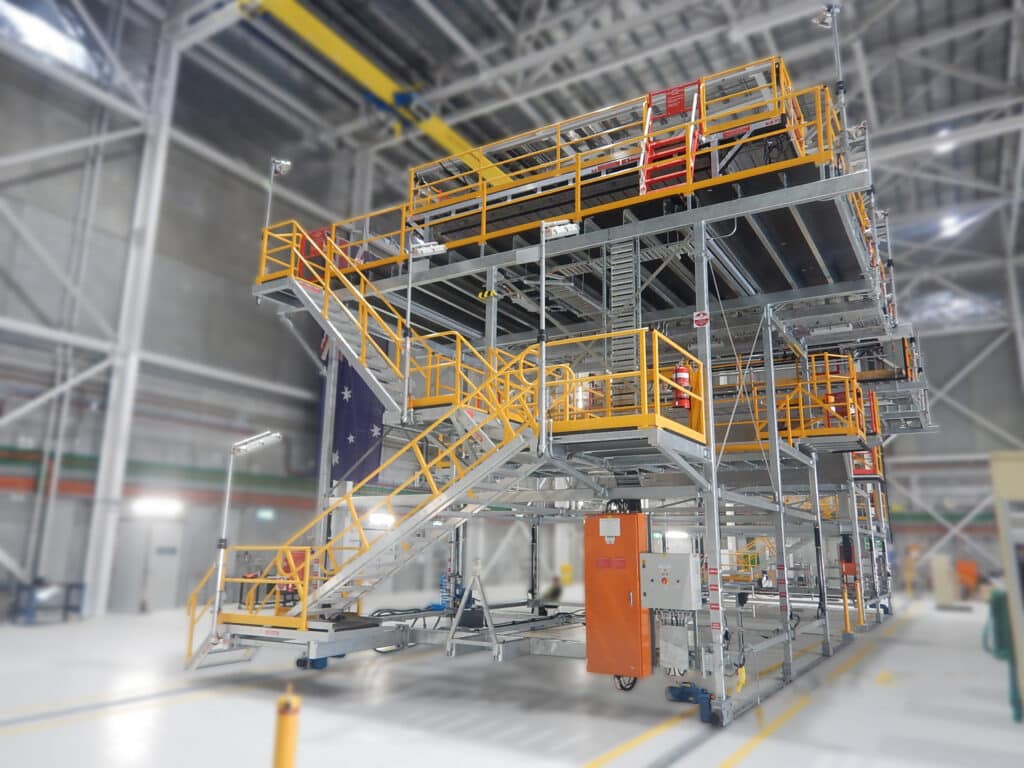
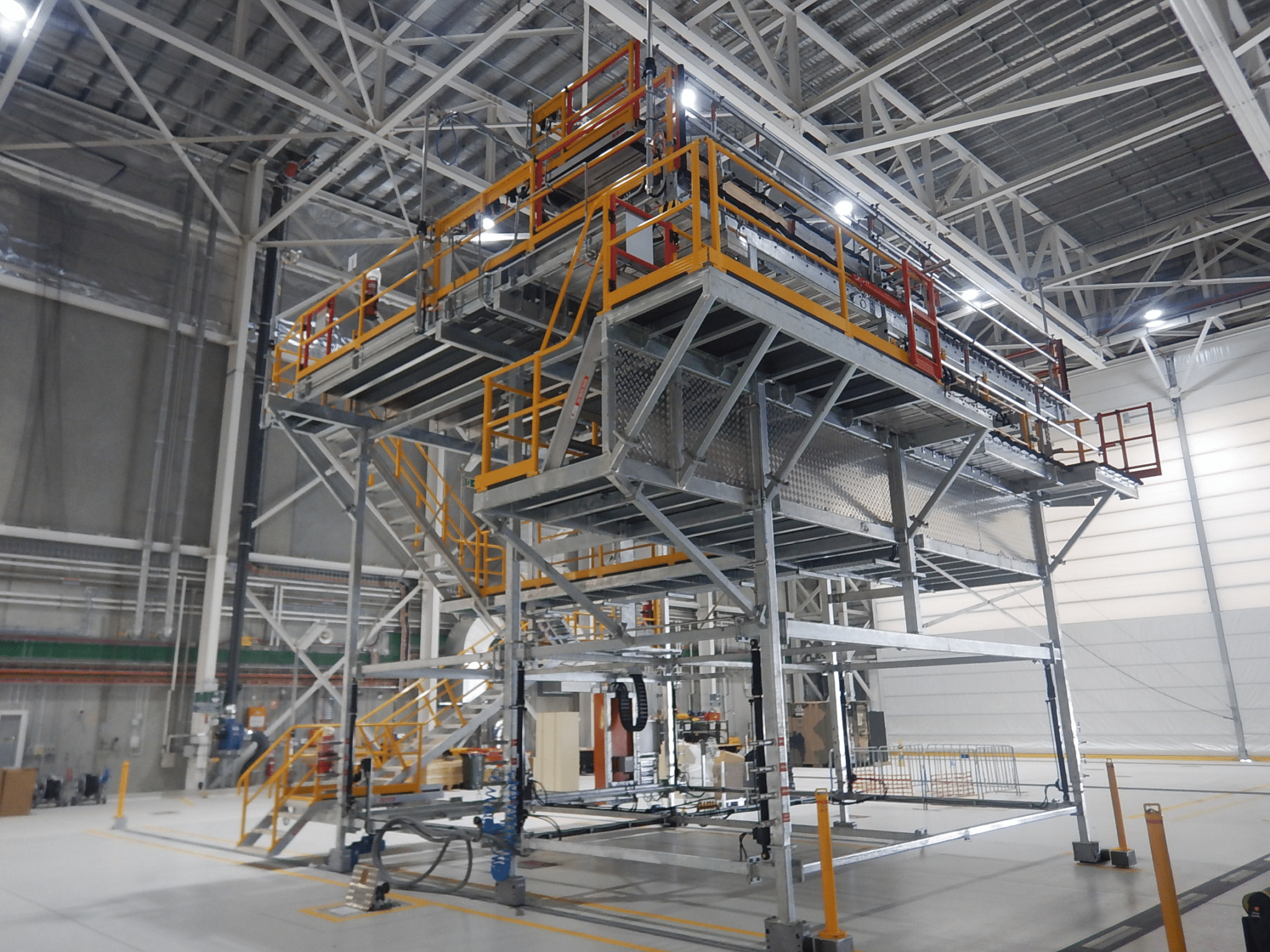
A new Defence aviation maintenance facility required access to the complete tail of a special mission aircraft. SafeSmart developed a four-level docking system around the aircraft profile, ground-support clearances, hangar systems and maintenance tasks.
The system was carried from site scoping through manufacture and commissioning, with documentation and support prepared for its service life.
Standard access equipment could not meet the aircraft and facility requirements
The docking module had to place crews at four levels around the tail depending on the task at hand. A standard flat workface design could not follow the aircraft’s curved profile or provide the required parking tolerance. The dock also had to operate in a hazardous area and sit alongside permanent systems installed throughout the new hangar.
SafeSmart was engaged as a subcontractor to the Tier 1 head contractor. The scope covered design and delivery of the dock, together with the interfaces required for installation and commissioning.
Site access introduced another constraint. Personnel required security clearance and photography inside the facility was prohibited, so inspection and design verification had to be planned around those controls.
The aircraft and hangar shaped the docking module
SafeSmart began with a detailed review of the aircraft and the work required at each level. The team engaged with the head contractor and the wider design group, including the architect and structural engineer. The facility operator and maintenance crews explained how the dock would be used, while specialist trades addressed their interfaces.
That review identified hazardous-area zoning and earthing and bonding under AS/NZS 3000. The module also needed permanent clearance for ground-support equipment. The design had to account for the overhead fall-arrest and hangar deluge systems.
The facility slab influenced the structural design. The dock had to provide the required capacity while limiting bearing pressure, and the crane rail needed to be recessed and grouted into the slab, ensuring no hinderance to other operational tasks in the Hangar while also enabling the space to be used for other aircraft types without hinderance.
These conditions ruled out adapting a standard platform after manufacture. Aircraft geometry and facility interfaces had to be included in the approved design.
Four working levels followed the aircraft tail
The tail’s curved profile created a variable gap against a conventional flat slider. It could also leave crews on a stepped working surface where close access was required.
SafeSmart designed a swivel end cap with all-weather foam buffering. The moving interface allowed the platform edge to follow the tail profile and provided more tolerance in the aircraft’s final parking position.
A heavy-duty hydraulic system provided 700 mm of vertical adjustment, with unique inherent engineering controls preventing against failure. Self-levelling stairs maintained a compliant stair angle under AS 1657:2018 across that range.
The dock combined high-tensile 6261 T6 aluminium extrusion with structural steel. Aluminium was used where components where part of the critical interface with the aircraft, while steel was used where additional structural capacity was required.
This gave the project team a four-level access structure designed around the aircraft rather than a flat, repeated platform layout.


How the aircraft tail docking system worked
Swivel end cap around the curved profile
The end cap rotated to follow the aircraft’s changing tail profile. All-weather foam buffering formed the interface, while the movement reduced the dock’s sensitivity to changes in the parked position.
Hydraulic height adjustment
The heavy-duty adjustment system moved the docking module through a 700 mm range, with 150 mm of contingency on either side. The connected self-levelling stair arrangement maintained the required stair angle as the platform height changed.
Mixed aluminium and steel structure
SafeSmart used high-tensile aluminium for components delivering the critical interface with the aircraft. Structural steel provided capacity in the supporting sections. The combination also helped limit bearing pressure on the facility slab.
Digital and physical fit checks
Before manufacture, SafeSmart modelled the dock against the aircraft’s 3D geometry and the wider hangar model. The design was then checked through two physical test fits and a 3D scan survey of the aircraft.
These checks confirmed the final fit before manufacture. This was particularly important in a facility where photography and general site access were restricted.
Installation on a surveyed crane rail
The as-built slab was surveyed before the recessed crane rail was set out and grouted. The docking module was assembled on site, then its electrical and pneumatic services were terminated using components rated for the hazardous area.
Commissioning included control-panel testing and integration testing with the hangar systems. The compressed-air system was pressure-tested at 1.35 times its operating pressure for one hour.
What changed for the Defence project team
An aircraft-specific working interface
The four-level module provided access around the curved tail without relying on a flat slider to bridge the profile changes. The swivel end cap and vertical adjustment allowed the docking position to respond to the aircraft.
Facility interfaces accounted for
Clearance for ground-support equipment was included in the layout. Fall-arrest, deluge, hazardous-area electrical and pneumatic requirements were coordinated with the dock rather than left as installation-stage changes.
Independent checks and controlled scope
The proposal recorded specifications, deliverables, applicable standards, inclusions, exclusions and programme across design approval, manufacture, transport, installation and commissioning.
Independent third-party engineering verification was documented as the project developed. Changes for the recessed rail and hazardous-zone electrical components were also recorded with their effect on scope and programme.
The preliminary design went through a formal review before final submission. Independent engineers verified the structural and fall-protection systems.
Manufacture and handover records
SafeSmart manufactured the dock in an ISO 9001-certified facility under inspection and test plans covering the steel and aluminium work. Welding and the manufacture of extrusion and sheet components followed the applicable Australian Standards.
The handover package included as-constructed drawings, electrical as-builts, a user manual, motor-control maintenance recommendations and an asset register with unique IDs and barcodes.
Crews responsible for the docking system received operator training. Ongoing support includes the defects liability period, planned inspections, spare parts and re-certification where required.


Aircraft access should be planned around the maintenance task
A custom dock is defined long before it reaches the hangar. Aircraft geometry, operator work positions, site services and structural limits all affect the final access arrangement.
For this Defence facility, digital modelling was supported by physical checks and staged review. The same information then carried into manufacture, site installation, commissioning and handover.
For future aircraft maintenance facilities, define the task first and record every fixed interface before selecting the access method. Engineering review remains specific to the aircraft, structure, site and operating conditions.
Plan aircraft maintenance access around the work task and facility.
Speak to SafeSmart about docking systems for new hangars and specialist aviation maintenance facilities.

