Scaffold edge protection is crucial for ensuring the safety of workers and the public during construction projects, especially on large and complex structures. Here are three examples showcasing different approaches to scaffold edge protection using Proscaf in Australia:
Scaffold edge protection is crucial for ensuring the safety of workers and the public during construction projects, especially on large and complex structures. Here are three examples showcasing different approaches to scaffold edge protection using Proscaf in Australia:
The Solution
Three Scaffolding Near Edge Projects
1. Shell House Project: Safety at Heights
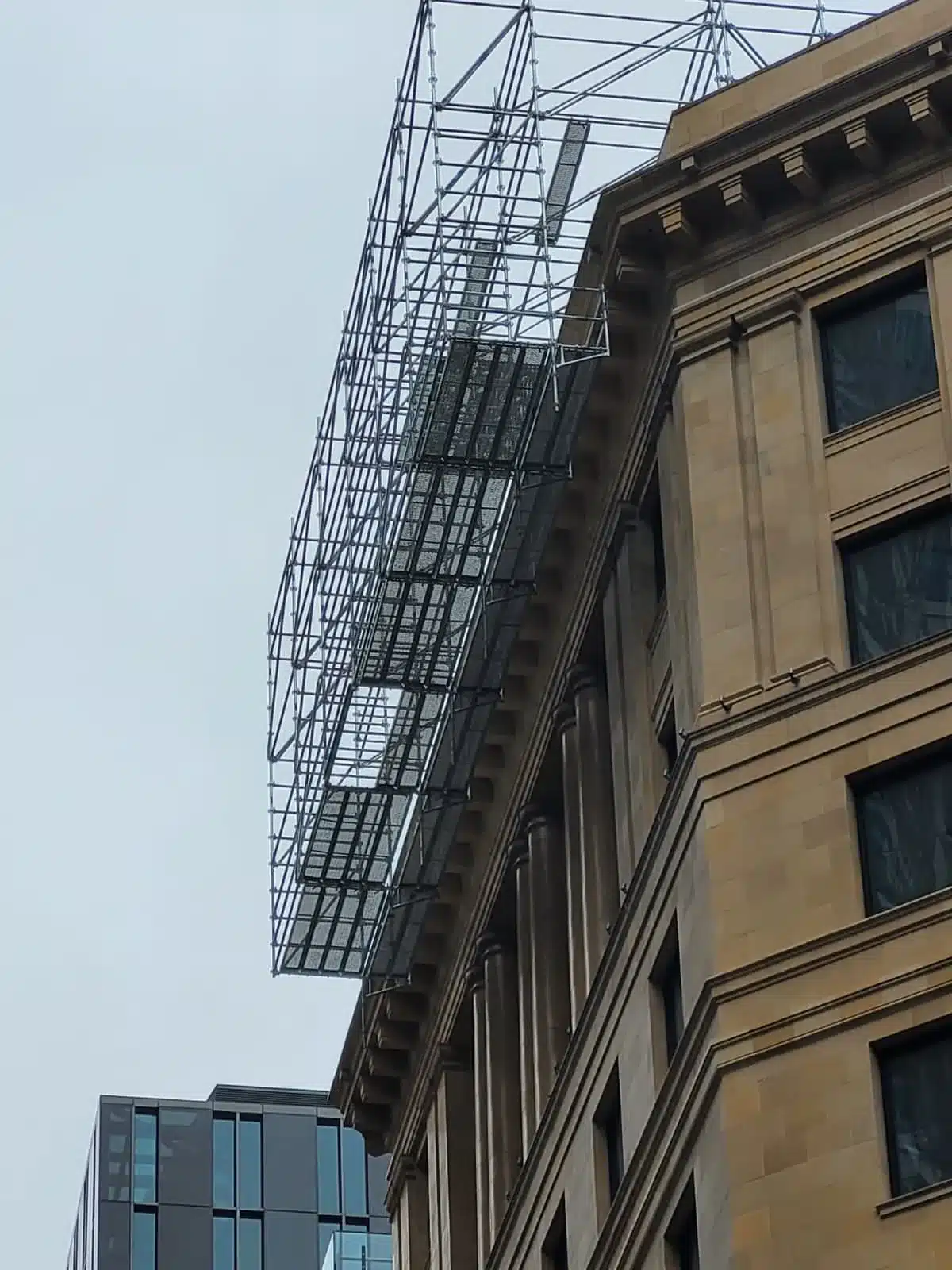
In the heart of Sydney, the historic Shell House underwent a significant renovation, and scaffold edge protection played a critical role in ensuring the safety of workers operating at extreme heights. Proscaf’s team provided advanced edge protection solutions designed specifically for high-rise buildings. The project’s complexity required customised scaffold edge protection systems that allowed workers to perform safely, while also maintaining easy access for tasks such as window replacement and façade work. Safety gates, guardrails, and toe boards were strategically installed around the perimeter of the scaffold to mitigate the risk of falls.
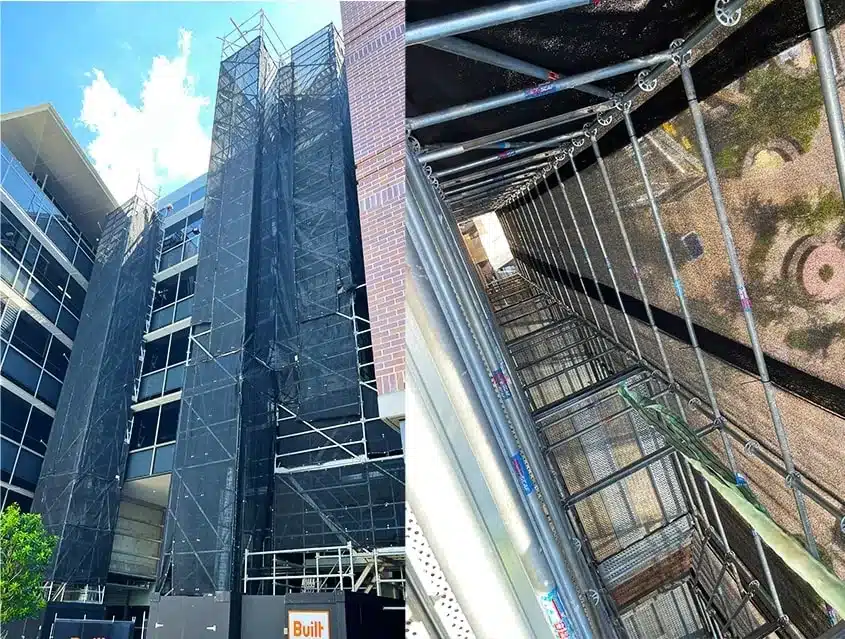
When the cladding of the Google HQ building in Pyrmont, NSW, needed replacement, Proscaf was called in to provide safe and efficient scaffold solutions. The building’s glass façade posed unique challenges, requiring scaffold edge protection that wouldn’t compromise the building’s aesthetics or functionality. Proscaf implemented modular scaffolding systems equipped with robust edge protection, including guardrails and containment mesh. This allowed workers to replace the cladding safely, while ensuring that no debris fell from the structure, thus maintaining safety both for workers and the public.
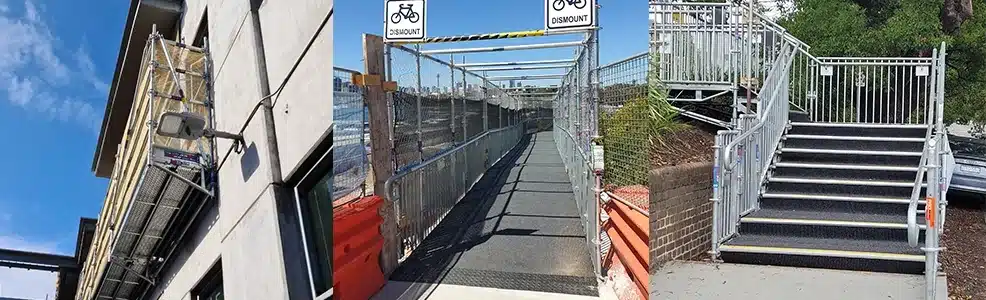
As part of Australia’s infrastructure upgrades, multiple rail projects across the country required scaffold edge protection to ensure worker safety during bridge construction and rail upgrades. In these projects, mobile scaffolding with edge protection systems, including temporary barriers and fall arrest systems, were utilised. The flexibility of Proscaf’s systems allowed rapid deployment and adjustments as the projects progressed. Edge protection was a critical aspect, particularly in areas with high public traffic, ensuring that both workers and commuters were kept safe.
When and Why to Use Scaffold Edge Protection Over Other Options
Scaffold edge protection is often the go-to safety solution on construction sites, particularly for projects involving work at height. However, understanding when and why to choose scaffold edge protection over other options such as personal fall protection systems, temporary fencing, or netting is crucial for maintaining optimal safety while balancing efficiency and cost-effectiveness.
When to Use Scaffold as Your Edge Protection
High-Rise or Multi-Level Structures: Scaffold edge protection is essential when working on tall structures, such as high-rise buildings, where the risk of falls increases with height. It provides a stable and secure platform for workers, allowing them to move freely without the need for individual fall-arrest systems like harnesses.
Projects Involving Façade Work or Cladding Replacement: When workers need consistent access to the exterior of a building, such as during façade repairs or cladding replacement, scaffold edge protection offers a continuous barrier that protects both workers and materials. Unlike netting or temporary fences, scaffold edge systems ensure safety throughout the entire height of the scaffold, as seen in the Google HQ cladding replacement project.
Complex Architectural Structures: For irregular or architecturally complex buildings where other fall protection systems might not provide adequate coverage, scaffolding with edge protection can be customized to fit around any shape, ensuring comprehensive safety. The Shell House renovation project demonstrated how scaffold edge protection was tailored to meet the specific needs of the structure.
Public Infrastructure Projects: In scenarios such as rail projects where public safety is paramount, scaffold edge protection can also be used to prevent accidental falls and keep construction debris from falling into high-traffic areas. This solution is ideal for bridges or elevated platforms, ensuring both workers and the public are protected.
Why Use Scaffold Over Other Options
Enhanced Safety: Scaffold edge protection provides a physical barrier around the perimeter of the working area, making it one of the safest options. Unlike personal protective equipment (PPE) like harnesses, which depend on the individual worker’s actions, edge protection ensures that the entire work area is enclosed, reducing human error.
Greater Coverage: For projects requiring extended horizontal or vertical reach, scaffold edge protection can be installed across multiple levels of a building or structure. It offers continuous protection over large areas, which is more effective than nets or single-level barriers.
Versatility: Scaffold edge protection can be used across various construction environments, whether for temporary works, high-rise structures, or public spaces. Its modular nature allows it to be configured and reconfigured quickly, providing an adaptable solution as the project evolves.
Compliance with Safety Regulations: In many regions, scaffold edge protection is required by law for certain types of construction work. It meets the safety requirements set by organizations such as SafeWork Australia and other regulatory bodies, making it the preferred choice for contractors aiming to remain compliant with strict safety standards.
If you’d like full run down on barrier protection, read our Ultimate Guide.