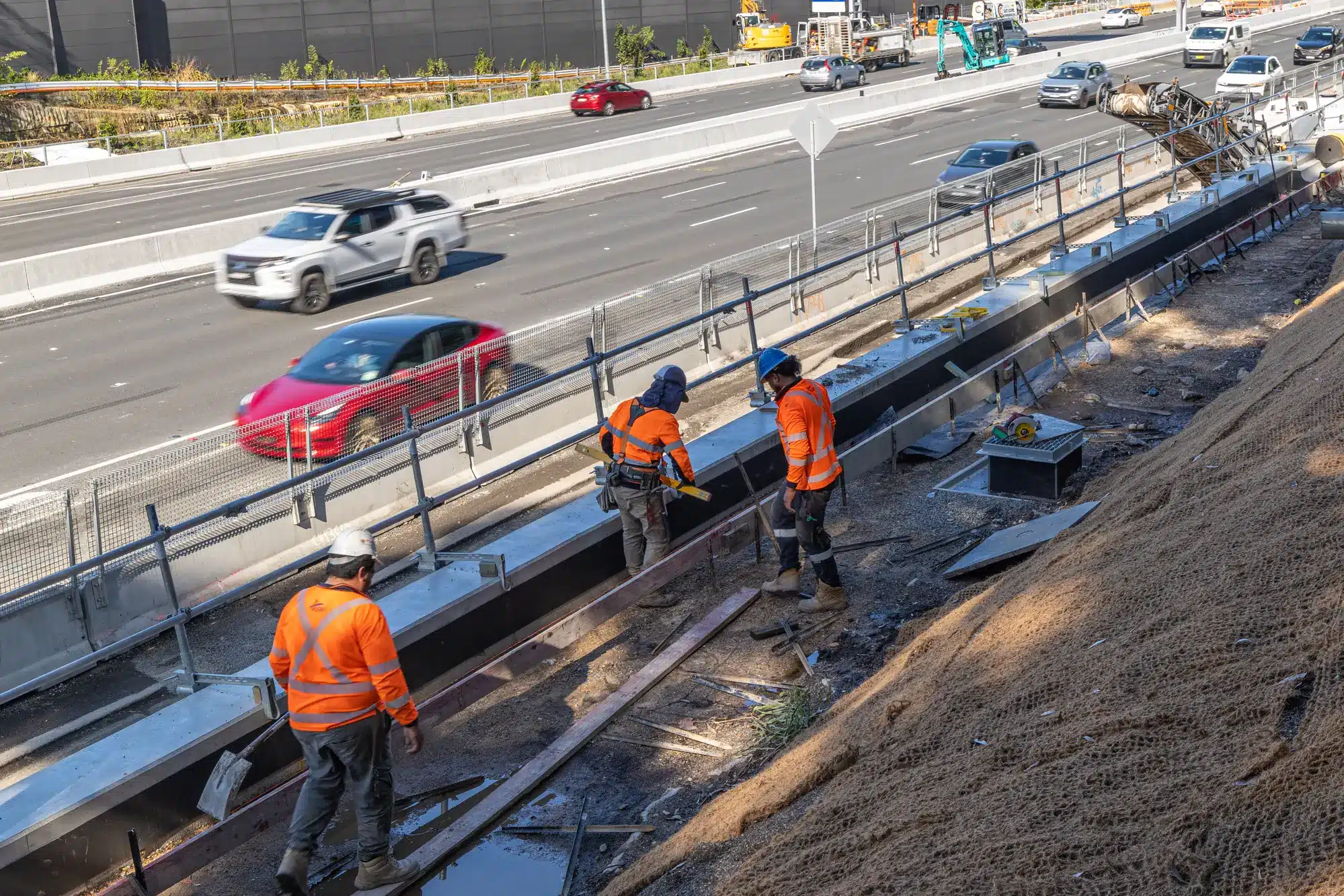
Temporary Guardrails for Warringah Freeway Sound Walls
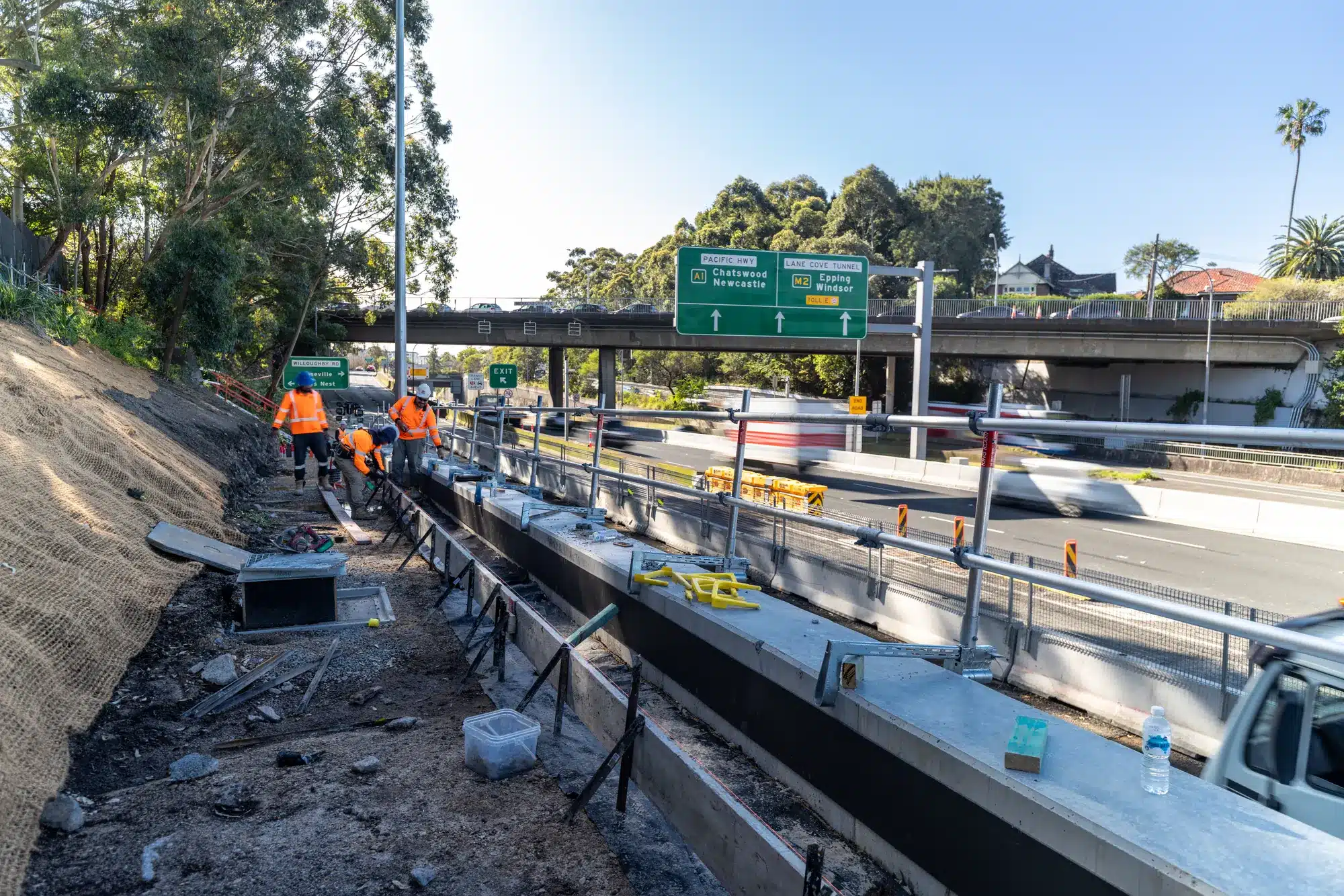
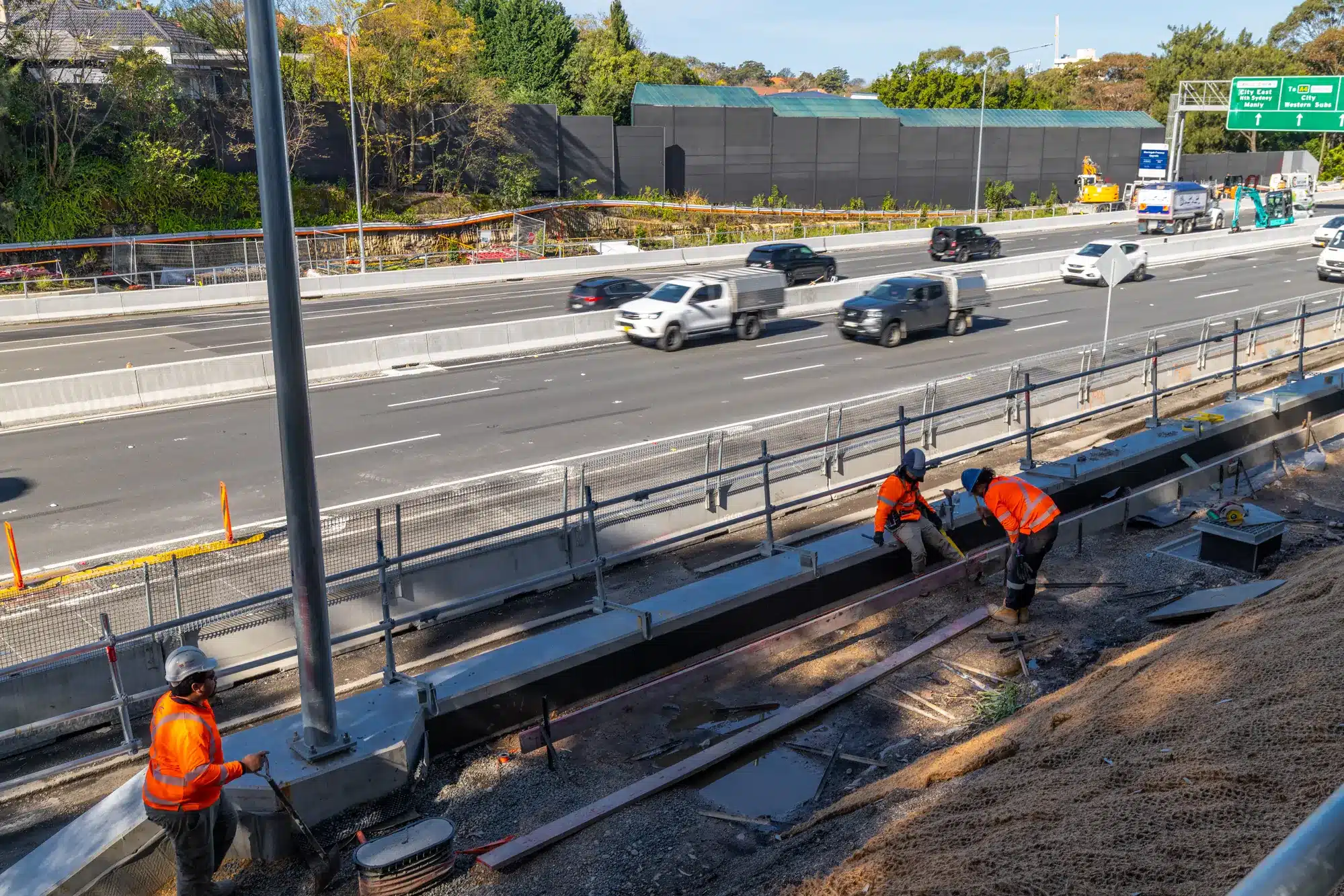
The sound wall crew at the Warringah Freeway Upgrade needed temporary guardrails along new concrete structures where conventional drilled posts did not suit the work. They also needed space to fit the permanent protection later, without taking down the temporary rail first.
The sound wall crew at the Warringah Freeway Upgrade needed temporary guardrails along new concrete structures where conventional drilled posts did not suit the work. They also needed space to fit the permanent protection later, without taking down the temporary rail first.
Roadside sound wall construction involves several stages. The edge still needs to be guarded while concrete and wall works progress, but the space available for a temporary post can change as permanent components go in. A temporary rail that occupies the permanent fixing line can get in the way at the point when the next crew needs to take over.
The Warringah Freeway Upgrade involved staged road, bridge and interchange works along the live corridor. On the same upgrade, a separate work area near Merrenburn Avenue needed portable stairs down a batter. The two locations illustrate why access routes and edge protection need to be planned around the structure and the job each crew is doing.
The Solution
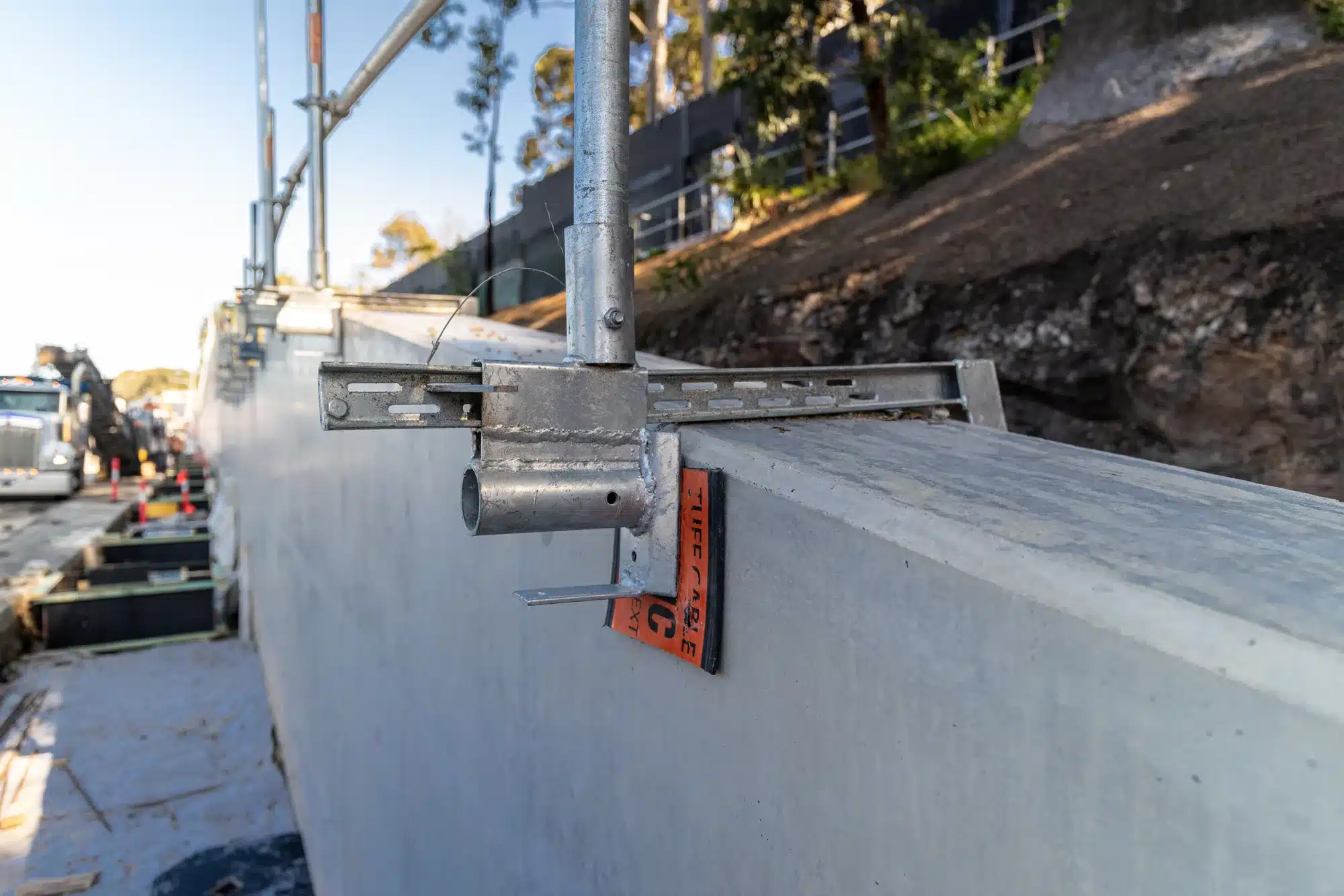
We supplied King Klampz to fix the temporary rails to the concrete edge without drilling. The clamp took its support from the structure itself, so the crew did not need a separate scaffold for the guardrail at that location. The Brook Street compound supervisor described how the rail position gave the team room to fit the permanent protection before removing the temporary line.
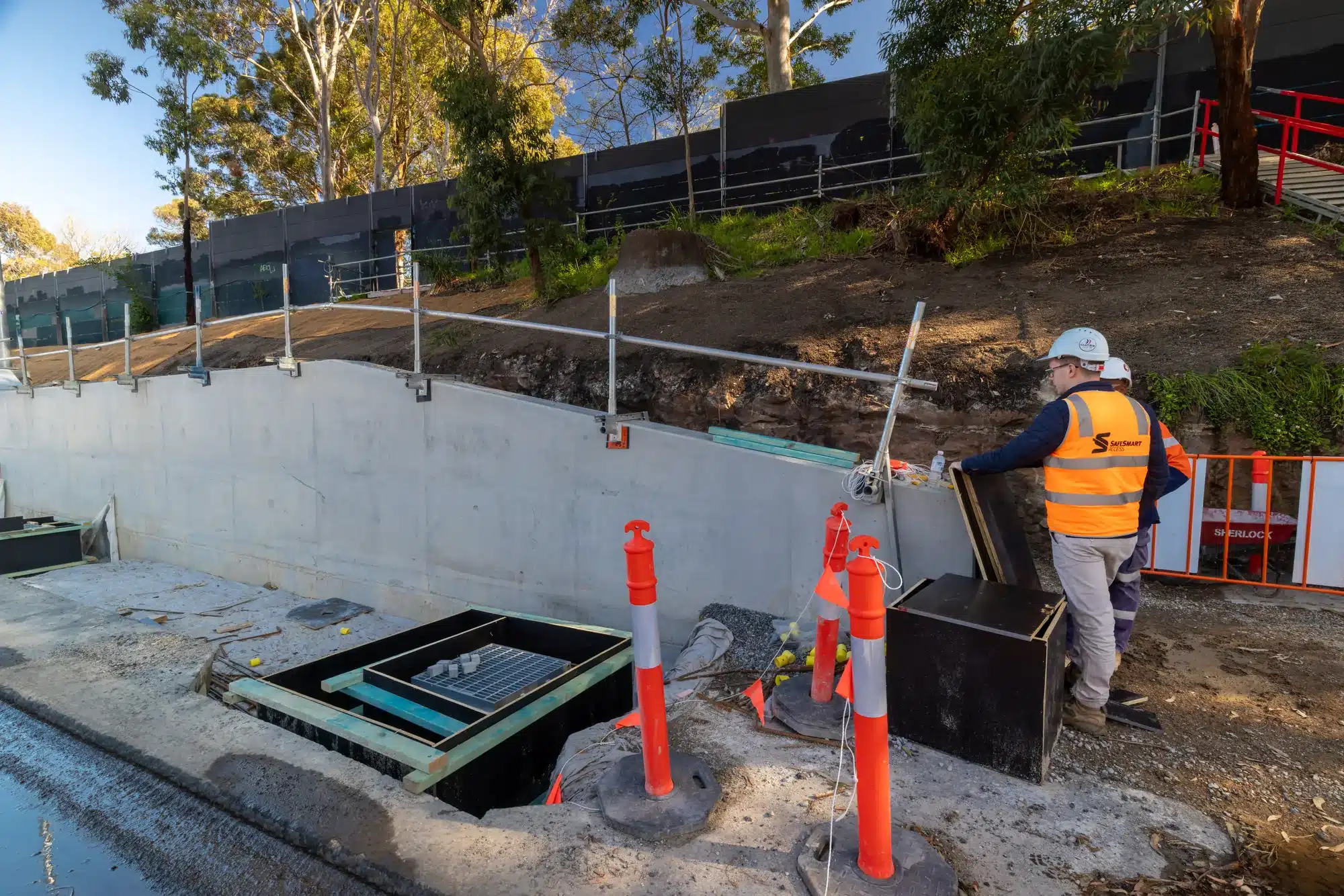
At the Warringah work area, the concrete edge gave the crew somewhere to clamp the posts. This removed the need to drill into the new concrete for the temporary system. It also avoided taking up ground space with a scaffold built solely to carry the guardrail.
King Klampz uses a wedge-lock connection that grips a suitable concrete edge. The Warringah footage shows a tube-and-coupler rail arrangement. The product also supports timber rails in the relevant configuration, and can be configured for horizontal use on parapets or vertical use at slab edges.
The useful design question is where the clamp can grip and where that puts the rail. The edge profile needs to suit the proposed arrangement, and the rail line needs to leave enough room for the task. On a wall with changing geometry, check transitions and ends as well as the straight runs.
Keep the function of the guardrail clear on the site plan. The temporary rail protects people working beside the edge. The sound wall is part of the permanent road works, and the temporary rail does not take the place of vehicle barriers or other traffic controls.
The Outcome
The supervisor explained that the team could fit permanent protection with the temporary rail still in place, then remove the temporary line. That sequence depends on giving the two systems separate space at the edge. If they share the same fixing line or installation space, the first rail can block work on the second.
Set out both lines on the same drawing before work starts. Show the temporary posts and rails, the permanent fixings, and where installers need to stand or reach. That gives the project team a chance to check the handover sequence and keep the edge protected as responsibility passes from one crew to the next.
Key Summary
King Klampz fixed temporary guardrails to a suitable concrete edge without drilled posts.
The wedge-lock clamp supported the rail from the concrete structure.
Planning both rail positions gave the permanent installation its own working space.
Planning Temporary Guardrails on Concrete
Start with the wall or slab section and the edge that people will work beside. Record the concrete profile, access from the working side and any surfaces that cannot be drilled. Mark corners, changes in level and any opening needed for access. Then compare that layout with the permanent works to see when the temporary rail can come out.