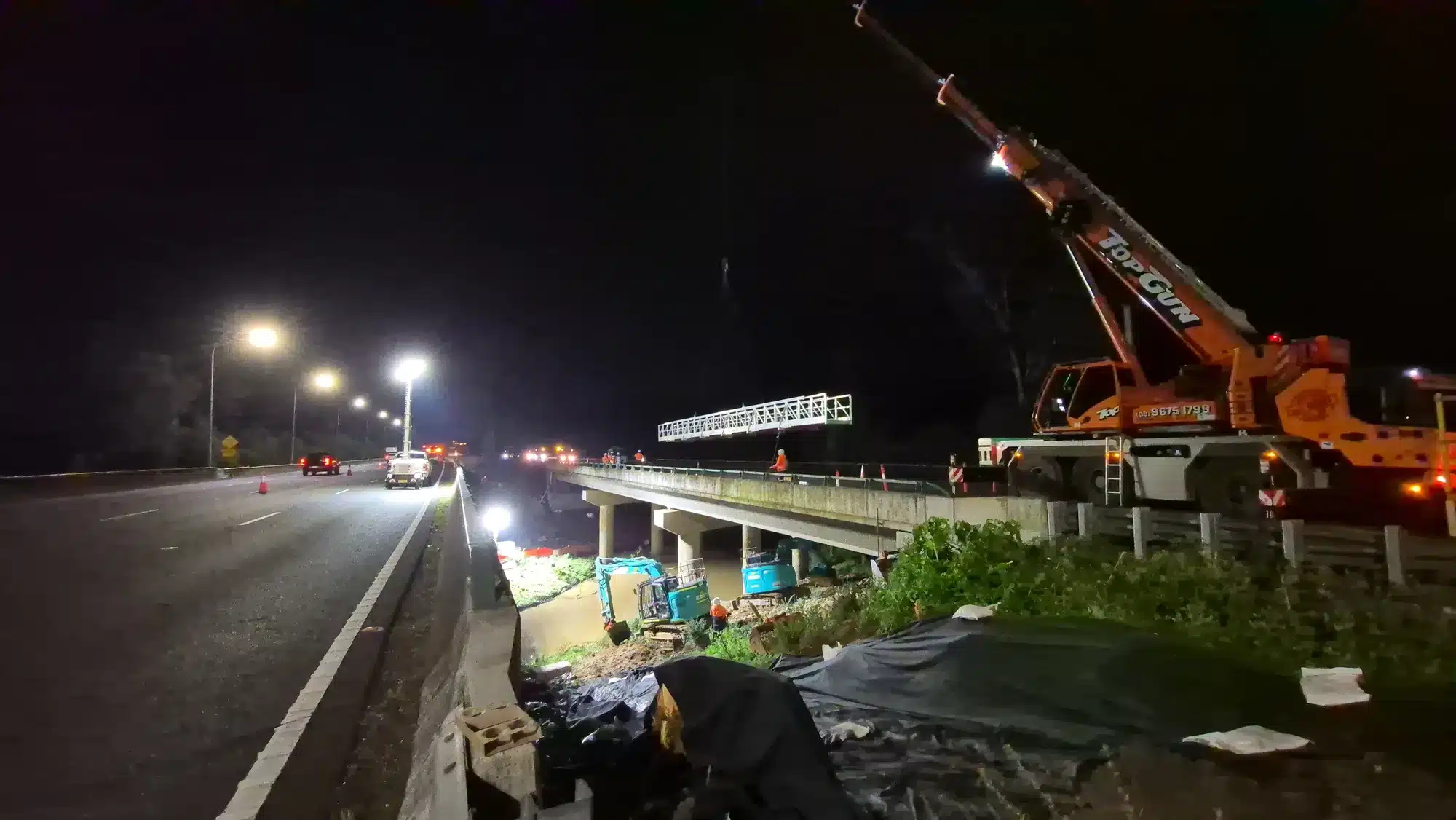
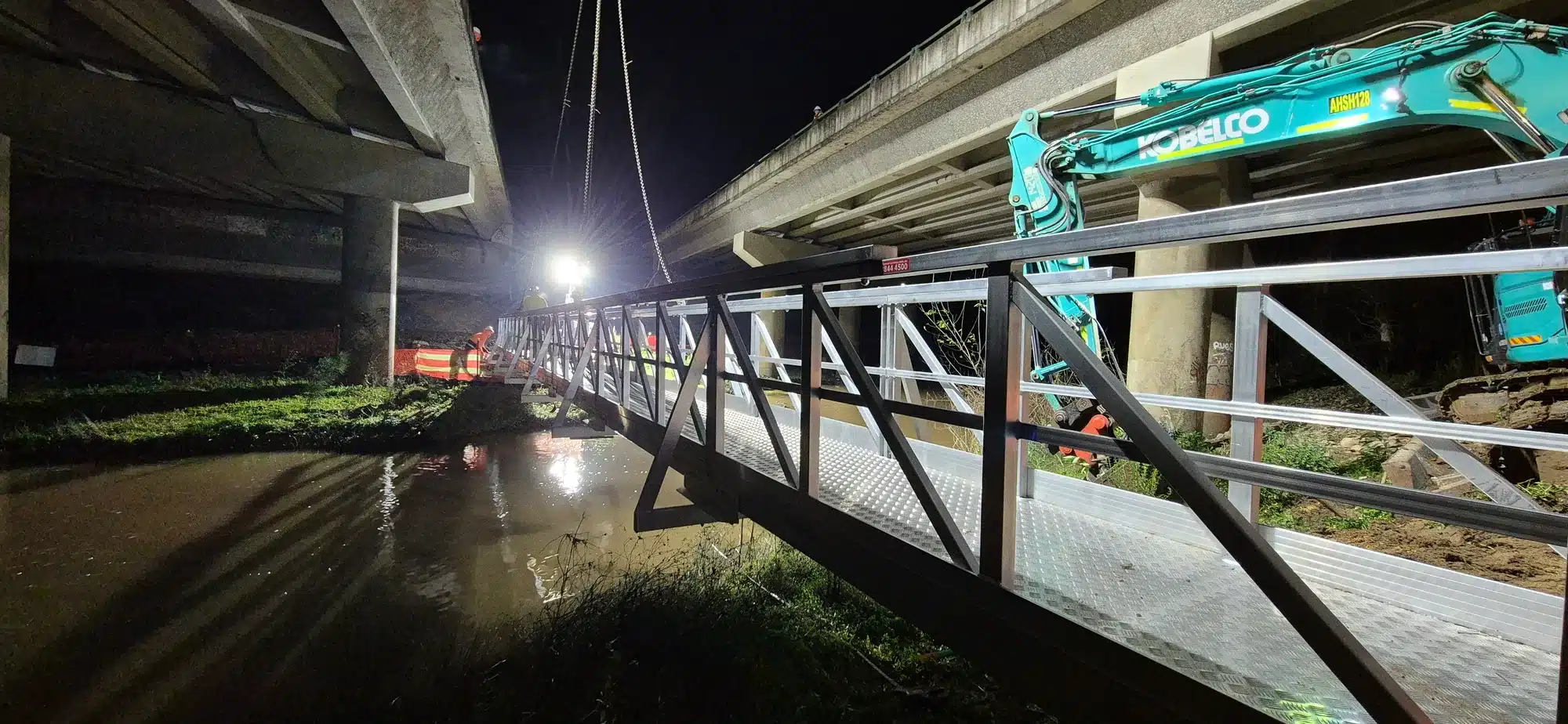
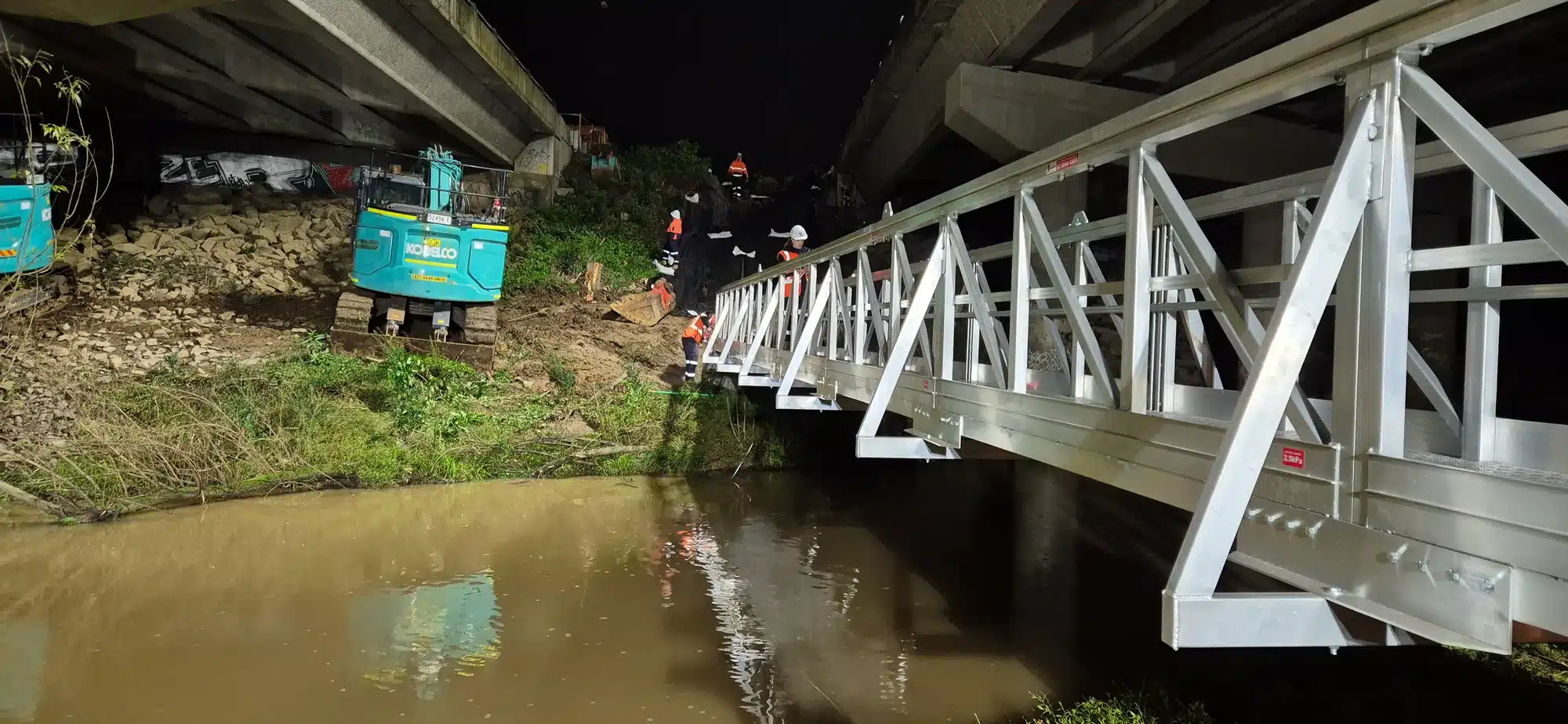
SafeSmart supplied a 21-metre AdaptaSpan temporary pedestrian bridge that could be prepared before the possession and lifted as one assembly. It arrived partially assembled, required about 30 minutes of final assembly on site and was craned into position in nine minutes during works commencing at 1:00 am.
The rapid installation started before the crane arrived. SafeSmart and Ward Civil planned the bridge around the crossing length, approach levels, supports, crane capacity and available laydown area, then prepared it beside the work zone.
A 21 Metre Modular Span
AdaptaSpan uses one-, two- and three-metre modules that bolt together to form the required crossing length. For South Creek, the modules formed a 21-metre span with a continuous deck and guardrails along the pedestrian route.
Building the length from standard modules gave the project a repeatable assembly sequence. Connections, deck alignment, lifting locations and the bridge ends could be checked before the span was moved over the creek.
Final Assembly Beside the Work Area
The bridge arrived partially assembled and required about 30 minutes of final assembly on site. That staging kept bolting and alignment work on the ground, where crews had clear access to both sides of the structure.
Pre-assembly also gave the team a defined point for the pre-lift checks. The completed span, guardrails, lifting points and end interfaces could be reviewed together before the bridge entered the crane's lifting zone.
A Crane Lift Planned Around the Possession
AdaptaSpan can be configured with dedicated crane-lifting lugs, allowing the assembled bridge to be handled as a planned temporary works lift. The project team could establish the crane position, rigging arrangement, exclusion area and communication sequence around one prepared assembly.
This turned the bridge installation into a short, controlled movement from the staging area to the crossing. The work did not depend on multiple deliveries or a sequence of small component lifts after the possession had started.
How AdaptaSpan Supports Rapid Temporary Bridge Installation
Modules Create the Required Length
The one-, two- and three-metre modules allow a bridge to be configured around the crossing rather than selecting a fixed off-the-shelf length. Sections bolt together on the ground and can later be dismantled for transport, storage or a different project configuration.
For civil projects, that modularity connects the design and the construction sequence. The bridge length can match the obstacle while the assembly remains practical for delivery, laydown and crane handling.
A 1.2 Metre Wide Deck for Personnel and Tools
AdaptaSpan is 1.2 metres wide, giving workers room to pass along the bridge with tools and small equipment. Full-length guardrails define the route and separate pedestrians from the open sides of the crossing.
The width also makes the bridge useful as a working site connection rather than a narrow single-person crossing. Movement can be planned as part of the site's pedestrian management arrangements.
Perforated Aluminium Deck and End Transitions
The perforated aluminium deck provides grip and allows water and loose material to drain through the walking surface. This is useful beside waterways and on civil sites where wet or muddy footwear is expected.
End ramps, anchor brackets and height-adjustment accessories can connect the bridge deck to the approach. Planning these interfaces with the span avoids creating a step or unfinished transition at the point where users enter and leave the bridge.
A 2.5 kPa Load Rating for Site Access
The system carries a 2.5 kPa load rating and is designed for temporary pedestrian access under AS 1657:2018. The modular deck, guardrails and bridge accessories form one access system rather than separate components selected after the span is installed.
For the project team, this brings the crossing, lifting method and user route into the same temporary works plan. The bridge can then be inspected, handed over and managed as a defined site asset.