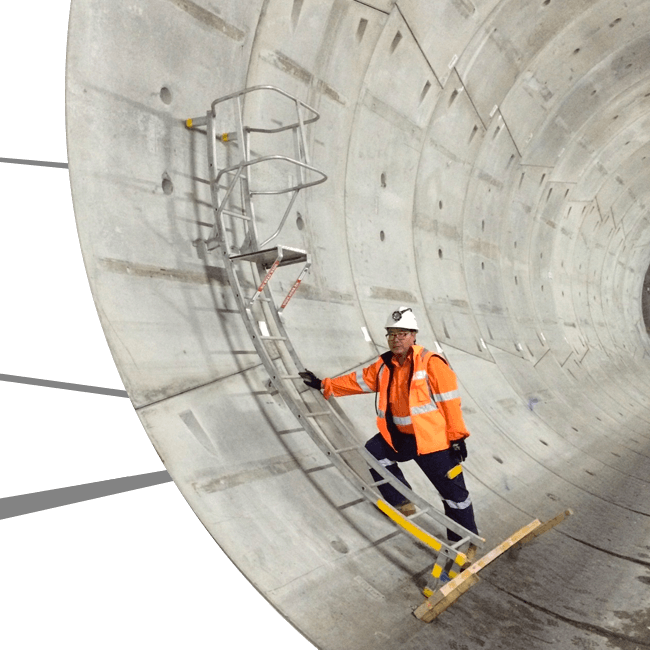
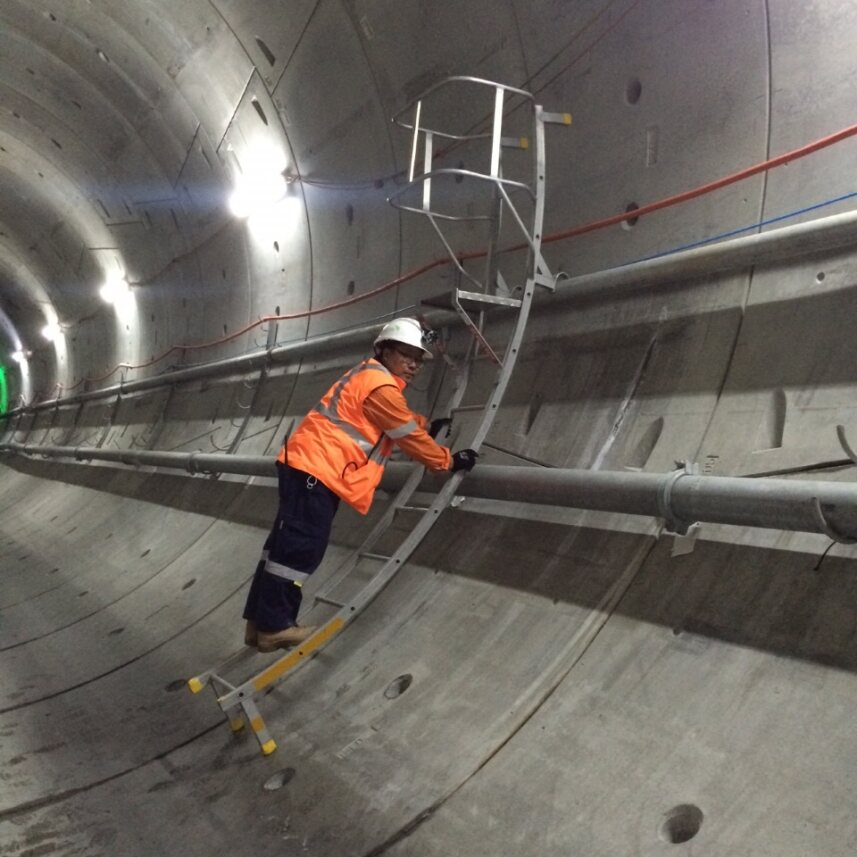
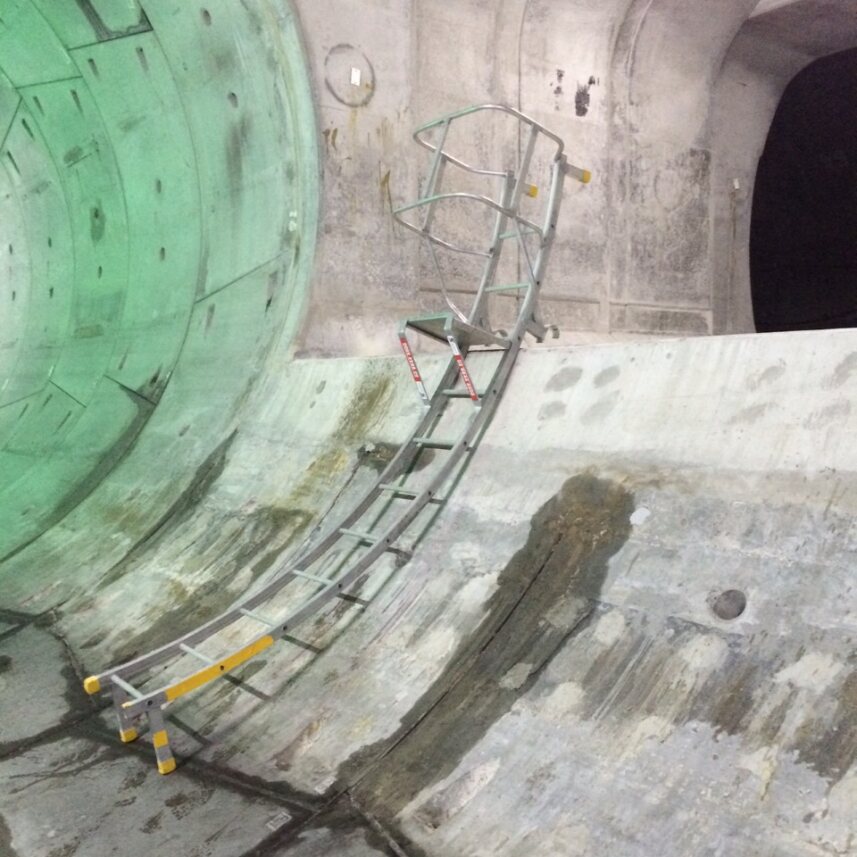
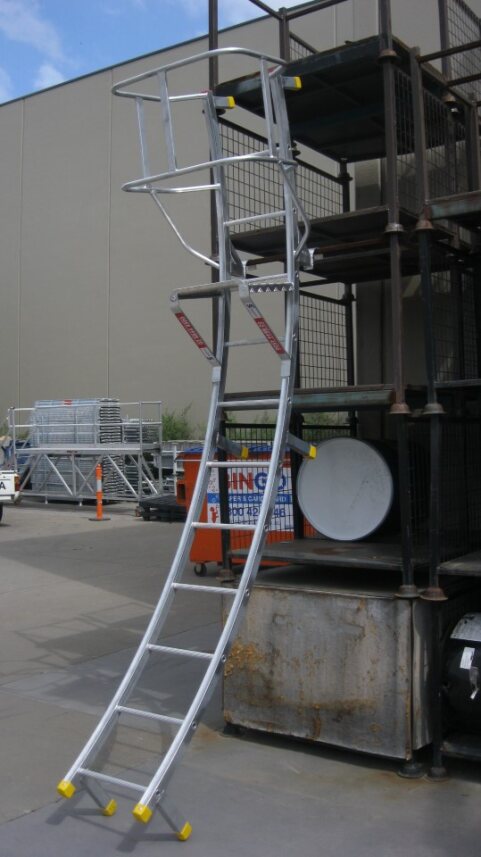
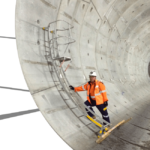
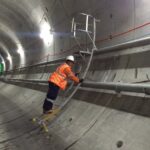
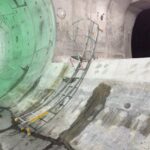
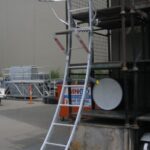
Maintenance teams often need to reach services at several points along curved tunnel walls. A standard ladder can be difficult to place against curved walls, which is why a tunnel ladder is designed for curved wall structures in tunnel environments. SafeSmart tunnel access ladders are engineered around the tunnel structure, the access height and the task at hand, addressing the needs of maintenance teams working in confined vertical or sub-surface environments in tunnels.
Depending on the project design, locating pins fit into specified ferrules in tunnel segments, or hooks connect over suitable service pipes. These connections hold the ladder at the planned work position and help minimise back strain for workers with an ergonomic working angle. A technician can then relocate the ladder to the next access point when site conditions allow.
We can develop a custom-fabricated aluminium ladder or a modular steel Proscaf configuration to suit the job. These systems provide access across utility, sewer, and mining infrastructures. We can also develop corrosion-resistant steel and fibreglass options built to withstand demanding industrial conditions.
The way the ladder meets the tunnel matters as much as its reach, and stable placement is vital for safe task performance. We check the wall curvature, fixing points and the route the worker takes between work areas, ensuring the access path stays reliable in use.
The result is a secure access method designed for safe access that lets crews spend less time setting up equipment and more time focused on the maintenance task during a shutdown. That is where the productivity gain comes from.
For repeated tasks, consider where the climber stands, how the rungs meet the work level and how far they must reach, because an ergonomic setup improves worker comfort and helps maintain focus over longer shifts. Awkward positions can add to fatigue and back strain, while anti-slip rung surfaces help reduce risk in wet conditions and support healthy workers on demanding sites.
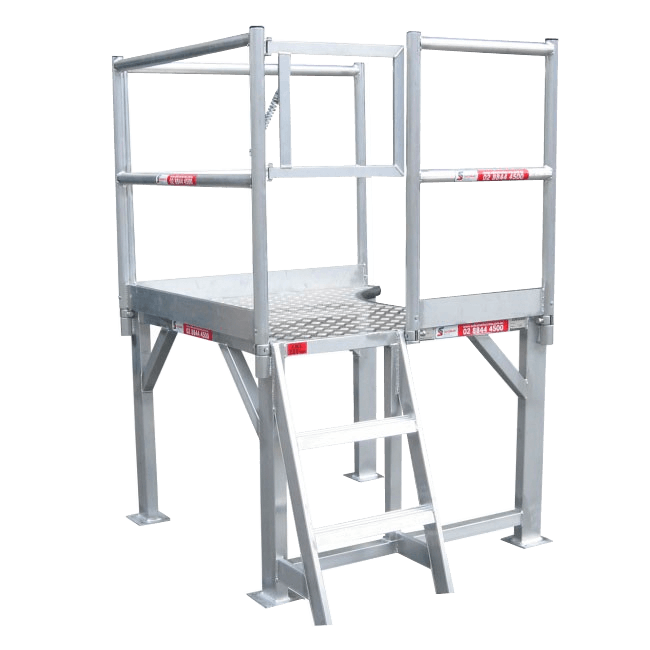
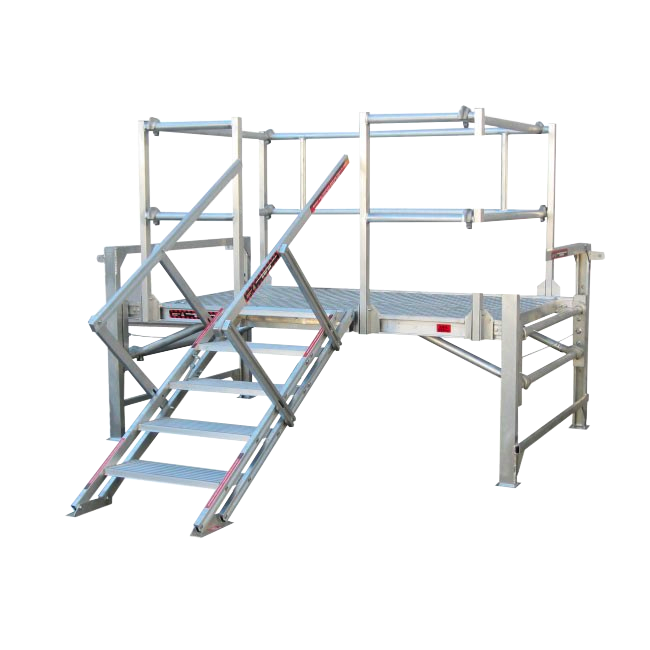
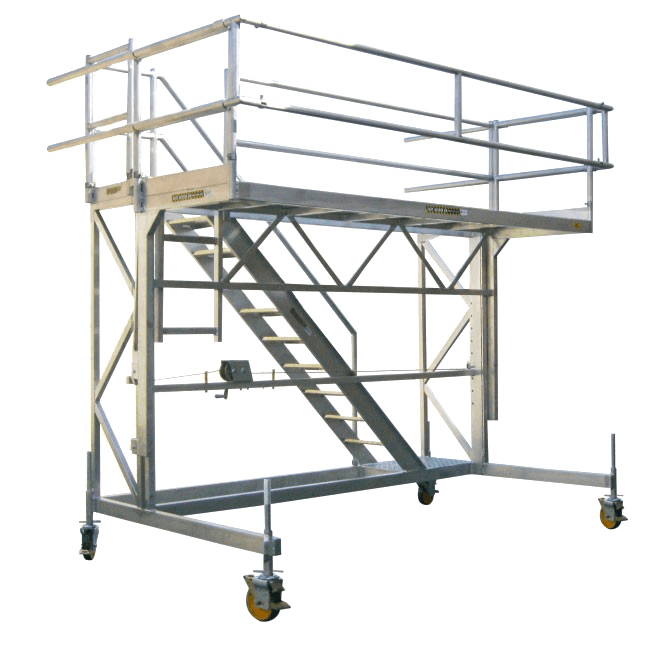
Where a task requires a standing platform, handrails or a cage, lifelines may also be specified where needed, and tunnel access ladders can be designed to meet Australian safety standards as part of a separate tunnel access walkway or engineered access design. Those features should be specified for the job rather than assumed to come with the ladder.
Where a barrier or pipework stops a ladder from reaching the wall, ask us about a cantilevered tunnel sill access platform or a custom walkway. The access method should match the position and duration of the work.
Maintenance teams often need to reach services at several points along curved tunnel walls. A standard ladder can be difficult to place against curved walls, which is why a tunnel ladder is designed for curved wall structures in tunnel environments. SafeSmart tunnel access ladders are engineered around the tunnel structure, the access height and the task at hand, addressing the needs of maintenance teams working in confined vertical or sub-surface environments in tunnels.
Depending on the project design, locating pins fit into specified ferrules in tunnel segments, or hooks connect over suitable service pipes. These connections hold the ladder at the planned work position and help minimise back strain for workers with an ergonomic working angle. A technician can then relocate the ladder to the next access point when site conditions allow.
We can develop a custom-fabricated aluminium ladder or a modular steel Proscaf configuration to suit the job. These systems provide access across utility, sewer, and mining infrastructures. We can also develop corrosion-resistant steel and fibreglass options built to withstand demanding industrial conditions.
The way the ladder meets the tunnel matters as much as its reach, and stable placement is vital for safe task performance. We check the wall curvature, fixing points and the route the worker takes between work areas, ensuring the access path stays reliable in use.
The result is a secure access method designed for safe access that lets crews spend less time setting up equipment and more time focused on the maintenance task during a shutdown. That is where the productivity gain comes from.
For repeated tasks, consider where the climber stands, how the rungs meet the work level and how far they must reach, because an ergonomic setup improves worker comfort and helps maintain focus over longer shifts. Awkward positions can add to fatigue and back strain, while anti-slip rung surfaces help reduce risk in wet conditions and support healthy workers on demanding sites.
Where a task requires a standing platform, handrails or a cage, lifelines may also be specified where needed, and tunnel access ladders can be designed to meet Australian safety standards as part of a separate tunnel access walkway or engineered access design. Those features should be specified for the job rather than assumed to come with the ladder.
Where a barrier or pipework stops a ladder from reaching the wall, ask us about a cantilevered tunnel sill access platform or a custom walkway. The access method should match the position and duration of the work.